Chinese Medicine Organ Body Clock
Your Body Has a Hidden Schedule —
The TCM Body Clock Explained
Ever find yourself waking up at the same time every night? Or feeling a dip in energy, focus, or mood at the same hour each day?
In Traditional Chinese Medicine (TCM, this pattern is rarely random. It may reflect the rhythm of the TCM Body Clock ⏳
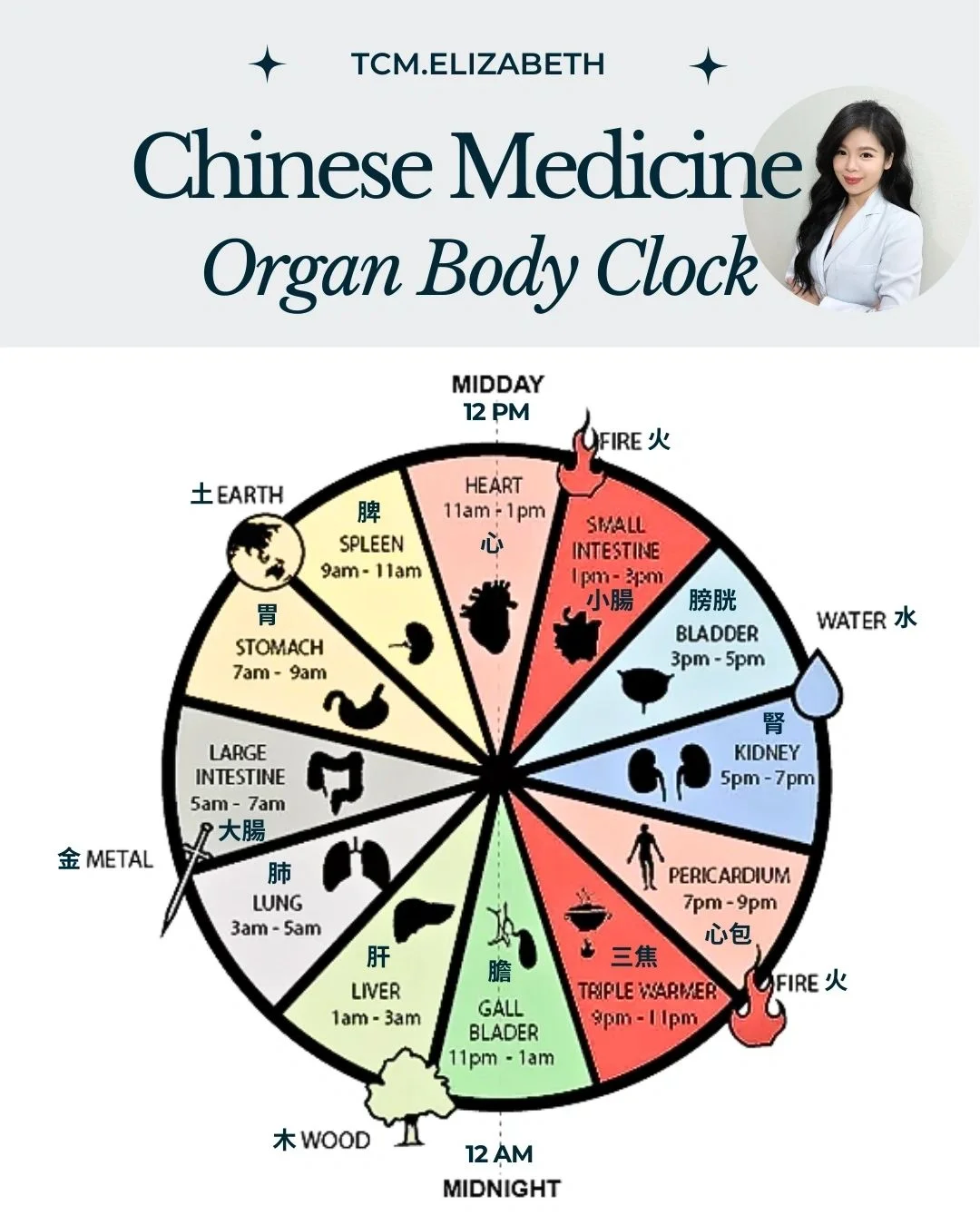
According to TCM theory, vital energy circulates through the body’s primary organ systems in a fixed 24-hour cycle, with each organ reaching peak activity for two hours daily. When an organ system is most active, it is the ideal time to:
support its physiological function
notice early signs of imbalance
understand emotional or energetic patterns related to that system
This rhythm reflects the continuous balance between activity and rest, as well as the smooth flow of energy, blood, and body fluids.
🌅 Daytime — Active Energy (Function & Movement)
5–7 AM | Large Intestine
This is the body’s natural elimination and detoxification phase. The Large Intestine is associated with letting go — physically and emotionally.
Hydration, gentle stretching, or deep breathing can support regular bowel movement and energy flow. Difficulty eliminating at this time may suggest stagnation or dryness.
7–9 AM | Stomach
Digestive strength peaks during this window, making it the most important meal of the day.
A warm, cooked, and nourishing breakfast supports digestion and energy production. Skipping breakfast or consuming cold foods may weaken digestive function over time.
9–11 AM | Spleen
The Spleen is responsible for transforming food into usable energy and blood. It is also closely linked to concentration, memory, and mental clarity.
This is an ideal time for focused work or learning. Fatigue, bloating, or brain fog may indicate weakened digestive energy.
11 AM–1 PM | Heart
The Heart governs circulation and emotional balance.
This time supports joy, connection, and emotional expression. Brief rest, laughter, or mindful meals help prevent overstimulation and protect heart energy.
1–3 PM | Small Intestine
The Small Intestine plays a role in absorption — not only of nutrients, but also of emotional experiences.
Heavy mental work may feel more draining during this period. Light activity and proper hydration support clarity and assimilation.
3–5 PM | Bladder
The Bladder supports fluid metabolism and waste elimination.
Gentle movement, stretching, and hydration help release tension and support overall energy circulation.
🌑 Nighttime — Restorative Energy (Repair & Storage)
5–7 PM | Kidneys
The Kidneys store the body’s core vitality, influencing growth, fertility, aging, and hormonal balance.
Evenings should be calm and restorative. Warm soups, meditation, or gentle breathing help preserve long-term energy reserves.
7–9 PM | Pericardium
This time supports emotional relaxation and nervous system regulation.
It is ideal for unwinding and spending quality time with family, fostering a sense of safety, warmth, and emotional ease.
9–11 PM | Triple Burner
This system coordinates internal communication, fluid balance, and hormonal regulation.
Preparing for sleep during this window is essential. Excess screen time, caffeine, or late stimulation may disrupt internal balance.
11 PM–1 AM | Gallbladder
This period supports physical recovery and detoxification.
Being asleep allows energy to descend and reset. Staying awake may lead to stagnation, irritability, or restless sleep.
1–3 AM | Liver
The Liver is responsible for detoxification, emotional regulation, and blood storage.
Waking during this time is often associated with stress, unresolved emotions, or internal tension. Deep sleep here is crucial for emotional resilience and hormonal balance.
3–5 AM | Lungs
The Lungs govern breathing, immunity, and emotional release.
Early waking during this time may reflect unresolved sadness or weakened respiratory energy. Gentle breathing or quiet reflection can help restore balance and prepare the body for the day ahead.
✨ Final Reflection
This is just a glimpse into the depth of TCM wisdom.
Each organ system is closely connected to:
physical function
emotional patterns
daily rhythms
long-term vitality
By noticing when symptoms arise, we gain valuable insight into where imbalance may exist, allowing for earlier, gentler, and more personalized care.
Content on this site is general health education. It does not replace individual diagnosis or treatment by a doctor or registered Chinese medicine practitioner. In an emergency call 999 or go to A&E.