Chinese Medicine View on Nasal Discharge Colors & Symptoms
Chinese Medicine View on Nasal Discharge: What the Color & Symptoms Reveal About Your Body
Runny nose is very common in daily life.
In Traditional Chinese Medicine (TCM), nasal discharge is not just a “cold symptom,” but an important sign reflecting the state of lung qi, the balance of cold–heat and deficiency–excess, and the harmony of body fluid metabolism.
In TCM, we look not only at “whether there is nasal discharge,” but also its color, thickness, smell, the time it appears, and how it changes over time.
Different patterns of nasal discharge – including no discharge but nasal dryness, or nosebleeds – often correspond to different internal conditions and constitutional tendencies, so proper assessment must also consider the tongue, pulse, and other symptoms, rather than judging by one sign alone.
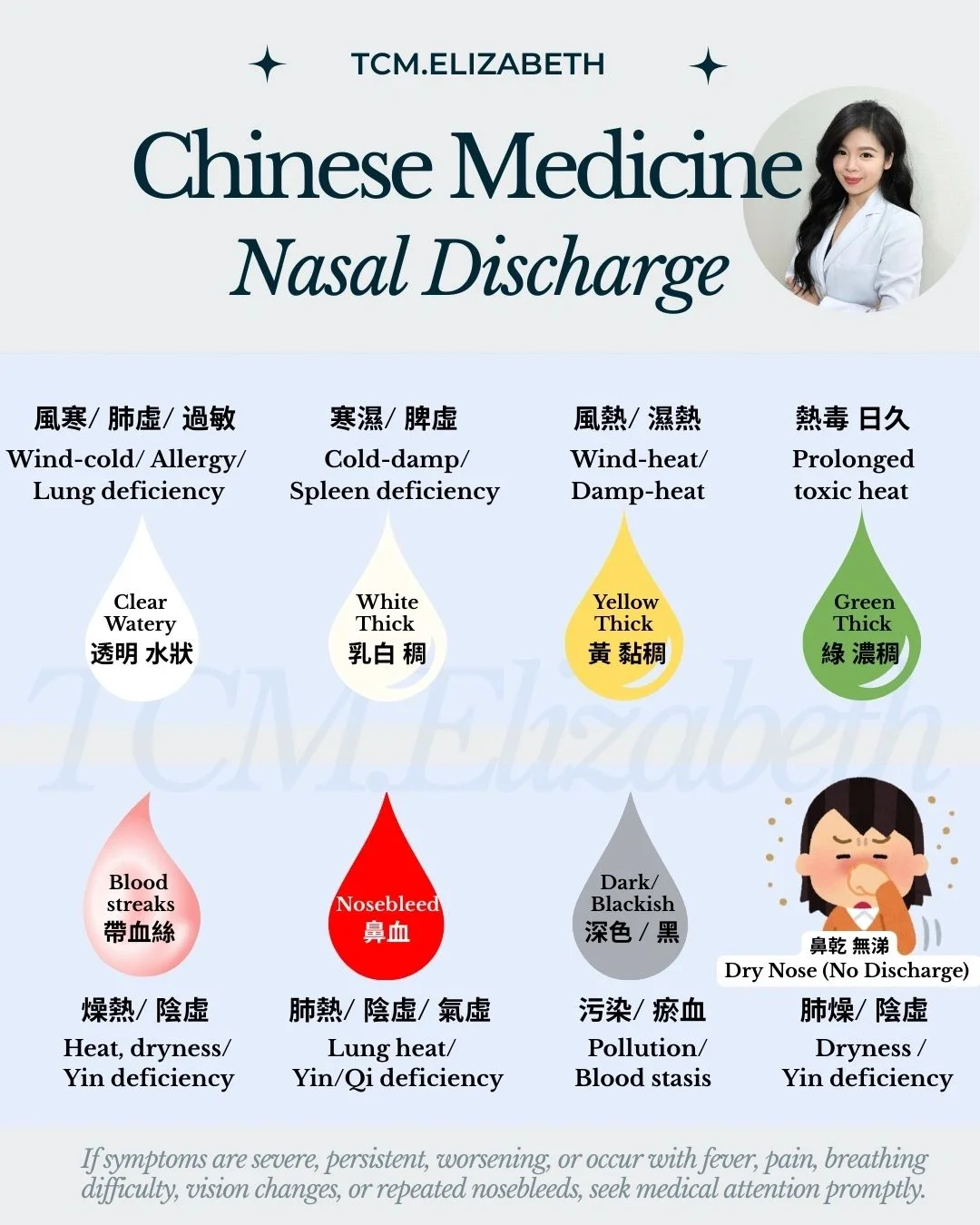
1️.Clear, Watery Nasal Discharge (Thin Clear Mucus)
The discharge is clear, watery, often copious, and tends to worsen with wind or cold exposure.
Commonly seen in:
· Allergic rhinitis, sensitivity to cold air or dust
· Early stage of the common cold, especially wind-cold type
· Qi-deficient constitutions that catch colds easily
Typical TCM tendencies:
· Wind-cold attacking the lung
· Cold constraining the exterior
· Lung qi deficiency, weak defensive qi (wei qi)
Why does it appear easily?
· Exposure to allergens (cold air, dust, animal dander, pollen, etc.)
· Being chilled by wind or rain without timely warming up
· Staying up late, lack of rest, leading to weakness of lung and defensive qi
· Constitutionally weak, easily fatigued, shortness of breath on exertion
· Repeated colds or prolonged illness weakening lung qi and defensive qi
How to improve it?
· Lifestyle and environment
o Keep warm, especially the neck, back, and feet; avoid cold wind blowing directly on the face and nose.
o Avoid spending long hours in strongly air-conditioned environments with large temperature differences; use a mask or scarf when going outside.
o Reduce exposure to obvious allergens and keep your living space clean and well-ventilated.
· Dietary adjustments
o Reduce raw, cold, and icy foods and drinks.
o Drink warm water; you may have some ginger–spring onion soup, ginger tea, or warm broths to help dispel cold.
· Rest and exercise
o Maintain a regular schedule and avoid staying up late.
o Do moderate exercise such as walking, stretching, tai chi, or Baduanjin to support upright (zheng) qi.
2️. Milky White, Slightly Thick Nasal Discharge
The discharge is milky white, slightly turbid, and more viscous, often evolving from previously clear mucus.
Commonly seen in:
· Colds or rhinitis that have lasted for a period
· People with “damp” tendencies who often feel heavy and tired
· Those who eat rich, greasy, or sweet foods and lack exercise
Typical TCM tendencies:
· Cold-damp obstructing the surface
· Phlegm-damp retention
· Spleen deficiency generating phlegm
· Insufficient yang qi and weakened transformation
Why does it appear easily?
· Diet rich in fried, grilled, greasy, and sweet foods, or a lot of dairy
· Prolonged sitting and lack of movement, leading to slower metabolism
· Being overweight, or not obviously overweight but often feeling heavy and sluggish
· Recovery phase of illnesses where the body has not fully regained strength and damp‑phlegm remains
How to improve it?
· Dietary adjustments
o Reduce greasy, rich, and sweet foods (fried foods, barbecues, creamy soups, milk tea, desserts).
o Avoid excessive iced drinks and large amounts of raw, cold foods to protect spleen yang.
o Eat more spleen‑strengthening, damp‑resolving foods such as coix seeds (Job’s tears), adzuki beans, Chinese yam, lotus seeds, and gordon euryale seeds (fox nuts), as appropriate to your condition.
· Lifestyle
o Exercise regularly to promote sweating and metabolism, such as brisk walking, light jogging, or simple calisthenics.
o Avoid long‑term exposure to damp, cold environments; dehumidify and keep warm when needed.
· Daily care
o Eat until about 70% full to reduce the burden on the digestive system.
o Maintain oral and nasal hygiene to reduce recurrent infections.
3️. Yellow, Thick Nasal Discharge
The discharge turns yellow and sticky, and may be accompanied by more severe nasal congestion, head distension, and dry mouth.
Commonly seen in:
· Colds or rhinitis that have worsened
· Heat moving deeper into the body (interior heat) or cold pathogens that have transformed into heat over time
· Episodes of sinusitis or recurrent infections
Typical TCM tendencies:
· Wind‑heat attacking the lung
· Phlegm‑heat obstructing the lung
· Damp‑heat accumulation
Why does it appear easily?
· External wind‑cold that is not addressed early, stagnating and turning into heat
· Long‑term staying up late, stress, and a diet high in spicy, fried foods, which contribute to internal heat
· Ongoing infection: as the struggle between upright qi and pathogens intensifies, body fluids are damaged by heat, and mucus becomes yellow and thick
How to improve it?
· Lifestyle and environment
o Ensure adequate rest; temporarily reduce heavy work and late nights.
o Avoid staying in hot, stuffy, poorly ventilated spaces for long periods.
· Dietary adjustments
o Reduce spicy, fried, grilled foods and alcohol.
o Eat light, easily digestible meals such as vegetables, moderate amounts of fruit, and congee.
o Drink warm water in small, frequent sips; avoid large amounts of icy drinks.
· Daily care
o When nasal congestion is obvious, gently rinse the nose with warm saline in a comfortable environment.
o If fever, headache, or facial pain are present, seek medical attention promptly.
4️. Green, Thick Nasal Discharge
The discharge appears green and thick, sometimes with a foul smell, often accompanied by marked nasal congestion, headache, and reduced sense of smell.
Commonly seen in:
· Sinusitis or chronic rhinitis in acute flare‑up
· Infections of longer duration or lingering illness
Typical TCM tendencies (usually “excess” patterns with heat):
· Phlegm‑heat accumulation
· Long‑standing damp‑heat
· Internal exuberance of toxic heat
Why does it appear easily?
· Colds or rhinitis that are not fully resolved, leaving pathogens and damp‑phlegm lodged in the nasal passages and sinuses
· Strong internal damp‑heat from poor diet (spicy, greasy foods), irregular lifestyle, and lack of rest
· More severe local infection producing copious, thick, greenish mucus over time
How to improve it?
· Medical evaluation
o Green, thick discharge often indicates more serious or prolonged infection, so it is advisable to seek professional evaluation early.
o If accompanied by high, persistent fever, severe headache, or facial pain and swelling, urgent medical care is needed.
· Supportive care
o Eat a light diet, avoiding spicy, fried foods and alcohol.
o Maintain adequate fluid intake to help thin and expel thick mucus.
o Avoid self‑medicating with strong or unknown nasal drops without guidance.
5️. Nasal Discharge with Blood Streaks
Nasal discharge that contains occasional blood streaks or small blood spots when blowing the nose is often related to fragile or dry nasal mucosa, or excessive force when blowing the nose.
Commonly seen in:
· Very dry air or environments with large temperature changes
· Habitual mouth breathing or frequent nose picking
· During colds or allergy episodes when the nasal mucosa is congested and more fragile
Typical TCM tendencies:
· Mild lung yin deficiency and lack of fluids
· Heat or dryness damaging the nasal collaterals
· Or simple mechanical damage from blowing or picking the nose
Why does it appear easily?
· Air that is too dry, leading to insufficient moisture of the nasal mucosa and easy cracking or bleeding
· Excess heat or dryness in the body, which can damage the fine vessels and collaterals in the nose
· Using excessive force when blowing the nose or picking it, directly injuring small blood vessels
How to improve it?
· Environmental care
o Maintain moderate humidity indoors by placing a cup of water or using a humidifier.
o Avoid prolonged direct exposure to strong air‑conditioning or heating.
· Behavior adjustment
o Blow the nose gently and avoid repeated forceful blowing.
o Do not pick the nose with fingernails; if scabs are present, soften them first with warm saline before gently cleaning.
· Diet and rest
o Eat moderate amounts of moistening foods such as cooked pears, lily bulbs, and honey water (if suitable for your condition).
o Avoid frequent late nights and overly spicy foods that increase internal heat.
· When to seek help
o If the amount of bleeding is large, occurs very frequently, or is accompanied by dizziness or other unusual symptoms, seek medical attention as soon as possible.
6️. Nosebleed (Bleeding Only, No or Minimal Mucus)
Here, the main symptom is bleeding from the nose itself – fresh blood flowing out or dripping – with little or no visible mucus.
Commonly seen in:
· Sudden nosebleeds during dry seasons or in heated or air‑conditioned rooms
· People with internal heat or “blood heat” tendencies
· After intense emotions, overexertion, or alcohol intake
Typical TCM tendencies:
· Heat in the lung or stomach flaring upward, forcing blood to move recklessly
· Yin deficiency with fire, dryness damaging the vessels
· Qi not holding blood properly, leading to blood leaking from the collaterals
Why does it appear easily?
· Very dry and hot environments that dry out and damage nasal vessels
· Habitual heavy consumption of spicy food, alcohol, or smoking, generating internal heat
· Emotional agitation, stress, or sudden spikes in blood pressure pushing blood upward
· Underlying deficiency of qi or yin that makes the vessels more fragile
How to improve it?
· Immediate care
o Sit upright, lean slightly forward, and pinch the soft part of the nose for several minutes.
o Avoid tilting the head back to prevent swallowing blood.
· Lifestyle and diet
o Reduce spicy, grilled foods and alcohol to lessen internal heat and dryness.
o Stay hydrated with warm or room‑temperature water; avoid frequent strong alcohol or very hot drinks.
o Ensure adequate rest; avoid long‑term overwork and staying up late.
· When to seek help
o If nosebleeds are frequent, heavy, difficult to stop, or accompanied by dizziness, palpitations, or other systemic symptoms, seek prompt medical evaluation.
7.Dark or Blackish Nasal Discharge (Heavily Soiled or Dark‑Tinged Mucus)
Dark, brownish, or black‑tinged nasal discharge may have various causes. The most common in daily life is external pollution, but in some cases internal heat, phlegm, or blood stasis may also be involved.
Common TCM‑oriented causes:
· External wind‑heat / phlegm‑heat obstruction:
o In the later stages of a cold or nasal infection, pathogenic heat may move inward and combine with phlegm, leading to severe congestion and thick, discolored mucus.
· Blood stasis and dryness:
o When the nasal mucosa is dry and damaged, or in chronic sinusitis with micro‑bleeding, dried blood can mix with nasal discharge, producing dark red, brown, or nearly black mucus.
· Environment and smoking:
o Long‑term exposure to smoke, dust, and pollution, or chronic smoking, can cause black particles and pollutants to adhere to the mucus, making the discharge appear dark or blackish.
Why does it appear easily?
· Working or living in environments with heavy smoke, dust, or air pollution
· Chronic smoking or exposure to second‑hand smoke
· Long‑standing nasal inflammation with dryness, scabbing, or small repeated bleeds
How to improve it?
· Environmental and lifestyle care
o Reduce exposure to polluted, dusty, or smoky environments; wear a suitable mask when necessary.
o Avoid smoking and stay away from second‑hand smoke.
o Use warm saline rinses after leaving polluted environments to gently clear the nasal cavity.
· Health vigilance
o If dark or blackish discharge appears occasionally after heavy exposure to dust or smoke and then resolves, it is often related to external pollutants.
o If dark, foul‑smelling, or blood‑stained mucus persists, or is accompanied by facial pain, headache, chronic cough, weight loss, or other systemic symptoms, seek medical assessment promptly so that both TCM and modern medical examinations can rule out more serious conditions.
8️. No Nasal Discharge but Very Dry Nose
In this pattern, there is little or no nasal discharge, but the nose feels dry, tight, itchy, or burning, sometimes with scabs inside the nostrils.
Commonly seen in:
· Dry climates or long‑term use of heating or air‑conditioning
· People who often stay up late, talk a lot, or have yin‑deficient constitutions
· After febrile illnesses or prolonged heat‑type conditions
Typical TCM tendencies:
· Lung dryness or lung yin deficiency
· Dryness evil (zao xie) invading the lung
· Body fluid depletion after illness or prolonged heat
Why does it appear easily?
· Lack of moisture in the environment, which dries out the nasal mucosa
· Internal dryness from insufficient fluids, excessive sweating, or too much hot/spicy food
· Yin deficiency from chronic overwork, stress, or insufficient sleep, leading to poor nourishment of the nasal passages
How to improve it?
· Environmental care
o Maintain moderate humidity indoors; consider using a humidifier or placing a bowl of water in the room.
o Avoid sitting directly in front of heaters, fans, or air conditioners.
· Lifestyle and diet
o Drink adequate amounts of water in small, regular sips.
o Eat moderate amounts of moistening foods such as cooked pears, lily bulbs, tremella (white fungus), sesame, or honey water (if suitable).
o Reduce excessively spicy, fried, and very dry foods (e.g., large amounts of crackers, chips).
o Avoid long‑term staying up late, and allow the body time to recover after illness.
· Local care
o Avoid repeatedly picking at scabs or crusts in the nose.
o If necessary, use mild, safe moisturizing sprays or rinses as advised by a professional.
Gentle Reminder & Disclaimer
· The color, amount, and presence or absence of nasal discharge – as well as symptoms like dryness or bleeding – can provide useful clues, but they are not sufficient on their own for diagnosis or to decide on medication.
· The same presentation (for example, yellow mucus or a dry nose) can arise from different causes in different people, depending on body constitution and disease stage.
· The information above is general TCM health education and cannot replace in‑person consultation, tongue and pulse examination, or comprehensive medical assessment.
· Please seek help from a qualified doctor (TCM or Western medicine) if you experience:
o Persistent high fever, severe headache, or obvious changes in vision or sense of smell
o Frequent or heavy nosebleeds
o Sudden, marked changes in the color, smell, or nature of nasal discharge accompanied by overall discomfort
Constitution and Professional Regulation Nasal discharge and nasal symptoms are only one external sign. TCM emphasizes “treating the same disease differently and different diseases similarly,” tailoring treatment according to each person’s constitution (such as qi deficiency, blood deficiency, phlegm‑dampness, yin deficiency, yang deficiency), lifestyle, and current symptom pattern.
If you often have a runny nose, nasal congestion, nosebleeds, or a persistently dry nose, it is best to consult a TCM practitioner for individualized assessment. By working on diet, daily routine, emotional balance, and appropriate herbal or acupuncture treatment together, you can address the root imbalance rather than merely controlling surface symptoms.
Content on this site is general health education. It does not replace individual diagnosis or treatment by a doctor or registered Chinese medicine practitioner. In an emergency call 999 or go to A&E.