Chinese Medicine: Tea/ Coffee Guide: Cooling, Warming & Digestion
✨ Traditional Chinese Medicine (TCM): TEA/COFFEE GUIDE ✨
TCM Tea/ Coffee Guide: Cooling, Warming & Digestion
In Traditional Chinese Medicine, everyday drinks influence the body’s internal balance. Choosing the right drink depends on your current pattern—such as heat, cold, dampness, or Qi stagnation—not just preference or taste.
Cooling Drinks
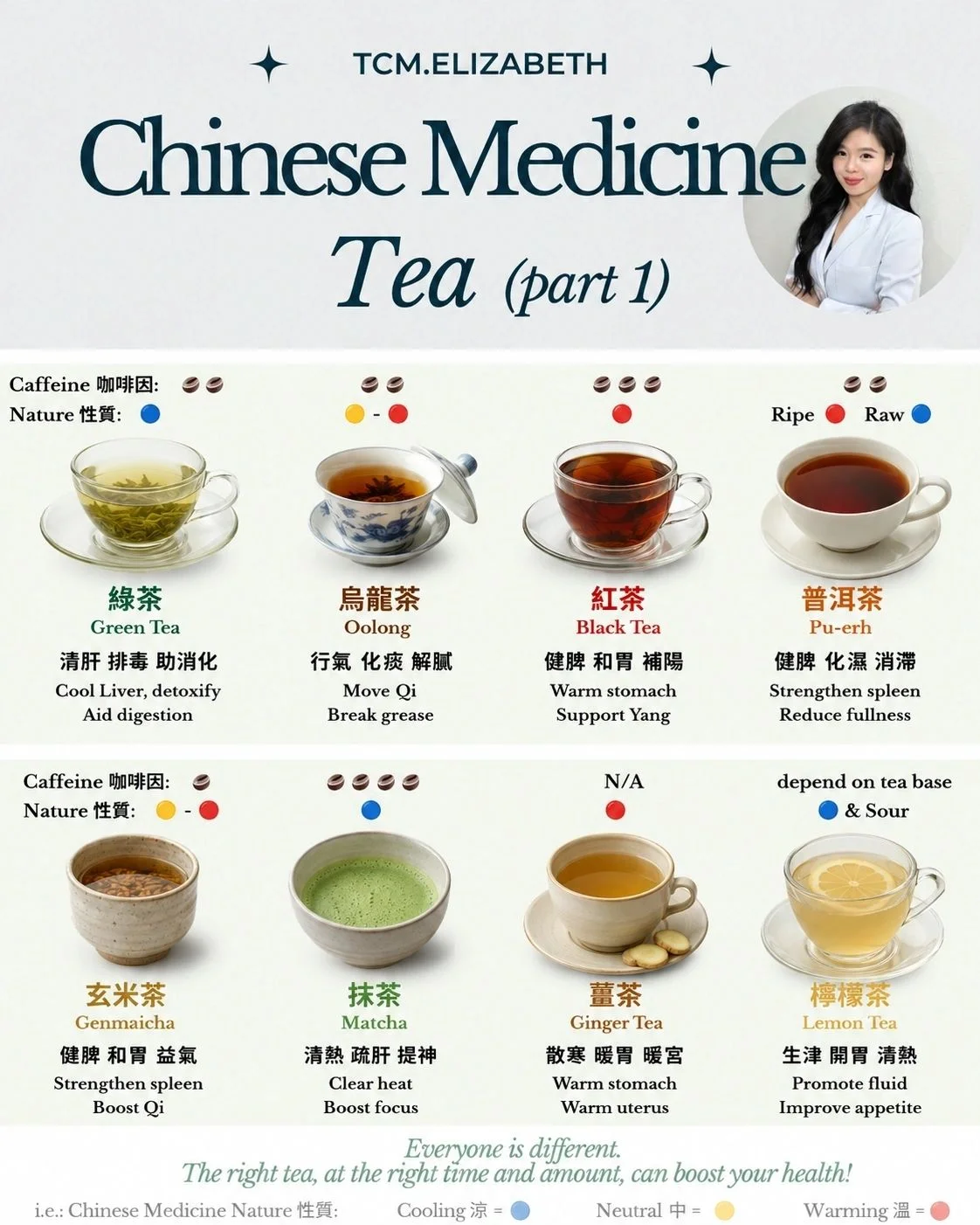
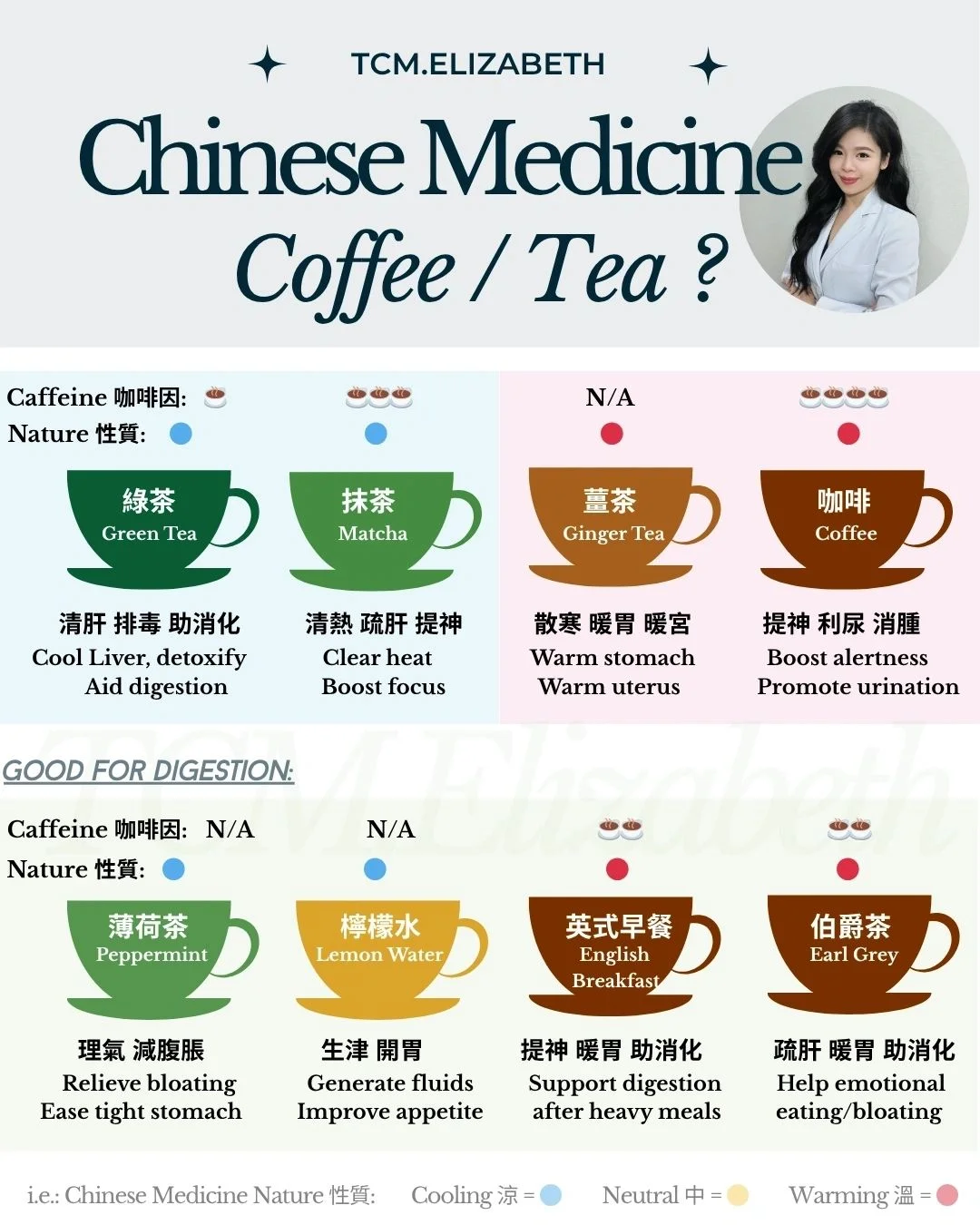
1. Green Tea Caffeine: Medium TCM Nature: Cooling
Functions:
Clears heat (especially Stomach heat)
Resolves Damp-Heat
Lightly promotes digestion
Refreshes the head and eyes
Suitable For:
Damp-Heat Pattern: acne, oily skin, sticky stools, heavy body, thick tongue coating
Mild Heat Pattern: irritability, thirst, bad breath
Qi Stagnation (mild): stress with digestive discomfort
Avoid If:
Stomach Cold Pattern: bloating after cold drinks, abdominal discomfort, loose stools
Yang Deficiency: cold limbs, fatigue, preference for warmth
Spleen Qi Deficiency: poor appetite, loose stools, low energy
2. Matcha Caffeine: High TCM Nature: Cooling
Functions:
Clears heat and resolves Damp-Heat
Enhances mental clarity
Lightly moves Qi
Suitable For:
Damp-Heat Pattern: acne, oily skin, heaviness, sticky stools
Mild Qi Stagnation: stress, tension, PMS symptoms
Avoid If:
Stomach Cold Pattern: bloating, loose stools, cold sensation in abdomen
Insomnia or palpitations: easily overstimulated
Yin Deficiency: night sweats, internal heat
Warming Drinks
1. Ginger Tea Caffeine: None TCM Nature: Warm to Hot
Functions:
Warms the middle (Stomach and Spleen)
Dispels internal cold
Stops nausea
Promotes circulation
Suitable For:
Yang Deficiency: cold hands/feet, fatigue, pale complexion
Cold in Stomach: abdominal pain relieved by warmth, loose stools
Cold-type menstrual pain
Avoid If:
Heat Pattern: acne, sore throat, mouth ulcers, irritability
Yin Deficiency: night sweats, dry mouth, internal heat signs
2. Coffee Caffeine: High TCM Nature: Bitter, drying, stimulating
Functions:
Moves Qi and promotes alertness
Stimulates bowel movement
Temporarily reduces fatigue
Suitable For:
Qi Stagnation: brain fog, low motivation, sluggish digestion
Mild Cold with stagnation
Avoid If:
Heat Pattern: acne, irritability, red eyes, constipation
Yin or Blood Deficiency: dryness, palpitations, poor sleep
Anxiety or insomnia
Good for Digestion
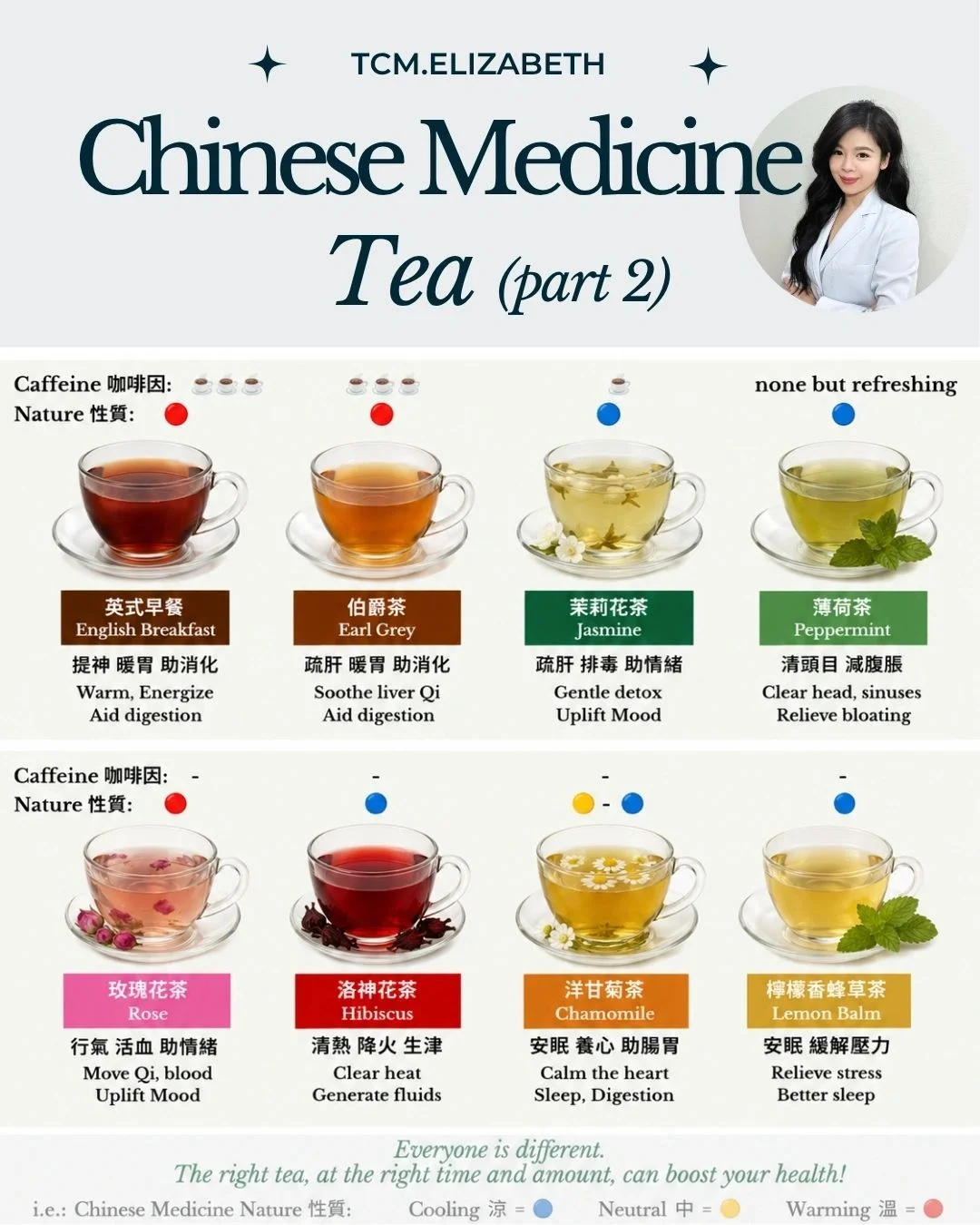
1. Peppermint Tea Caffeine: None TCM Nature: Cooling, aromatic
Functions:
Moves Qi and relieves stagnation
Relieves bloating and gas
Disperses Wind-Heat (head, throat)
Suitable For:
Qi Stagnation: bloating, stress-related digestive tension, sighing
Mild Heat: irritability, head discomfort
Avoid If:
Stomach Cold Pattern: abdominal coldness, loose stools
Yang Deficiency: fatigue, cold body
2. Lemon Water Caffeine: None TCM Nature: Slightly cooling, sour
Functions:
Generates fluids and relieves thirst
Supports Stomach function
Gently soothes Liver Qi
Suitable For:
Qi Stagnation: mild bloating, emotional tension
Mild Heat: thirst, bad breath
Fluid deficiency
Avoid If:
Stomach Cold Pattern: bloating after cold drinks, abdominal discomfort
Spleen Qi Deficiency: poor digestion, loose stools, fatigue
Acid reflux or sensitive stomach
3. English Breakfast Tea Caffeine: Medium to High TCM Nature: Warm, slightly drying
Functions:
Warms the Stomach
Supports digestion of heavy foods
Promotes circulation
Suitable For:
Cold-Damp Pattern: heaviness, sluggish digestion
Stomach Cold: bloating, discomfort relieved by warmth
Mild Qi Stagnation
Avoid If:
Heat Pattern: acne, mouth ulcers, irritability
Yin Deficiency: dryness, insomnia
4. Earl Grey Caffeine: Medium to High TCM Nature: Warm, aromatic
Functions:
Moves Qi and relieves stagnation
Reduces post-meal fullness
Aromatically transforms mild dampness
Suitable For:
Qi Stagnation: bloating, chest or rib-side tightness, emotional eating
Mild Damp accumulation: heaviness, sluggish digestion
Avoid If:
Heat Pattern: irritability, red eyes, mouth ulcers
Spleen Qi Deficiency: loose stools, poor appetite
Disclaimer
This guide is for educational purposes based on Traditional Chinese Medicine principles. It does not replace individual diagnosis or treatment. If you are pregnant, have chronic conditions, or are unsure of your pattern, consult a qualified TCM practitioner.
Content on this site is general health education. It does not replace individual diagnosis or treatment by a doctor or registered Chinese medicine practitioner. In an emergency call 999 or go to A&E.