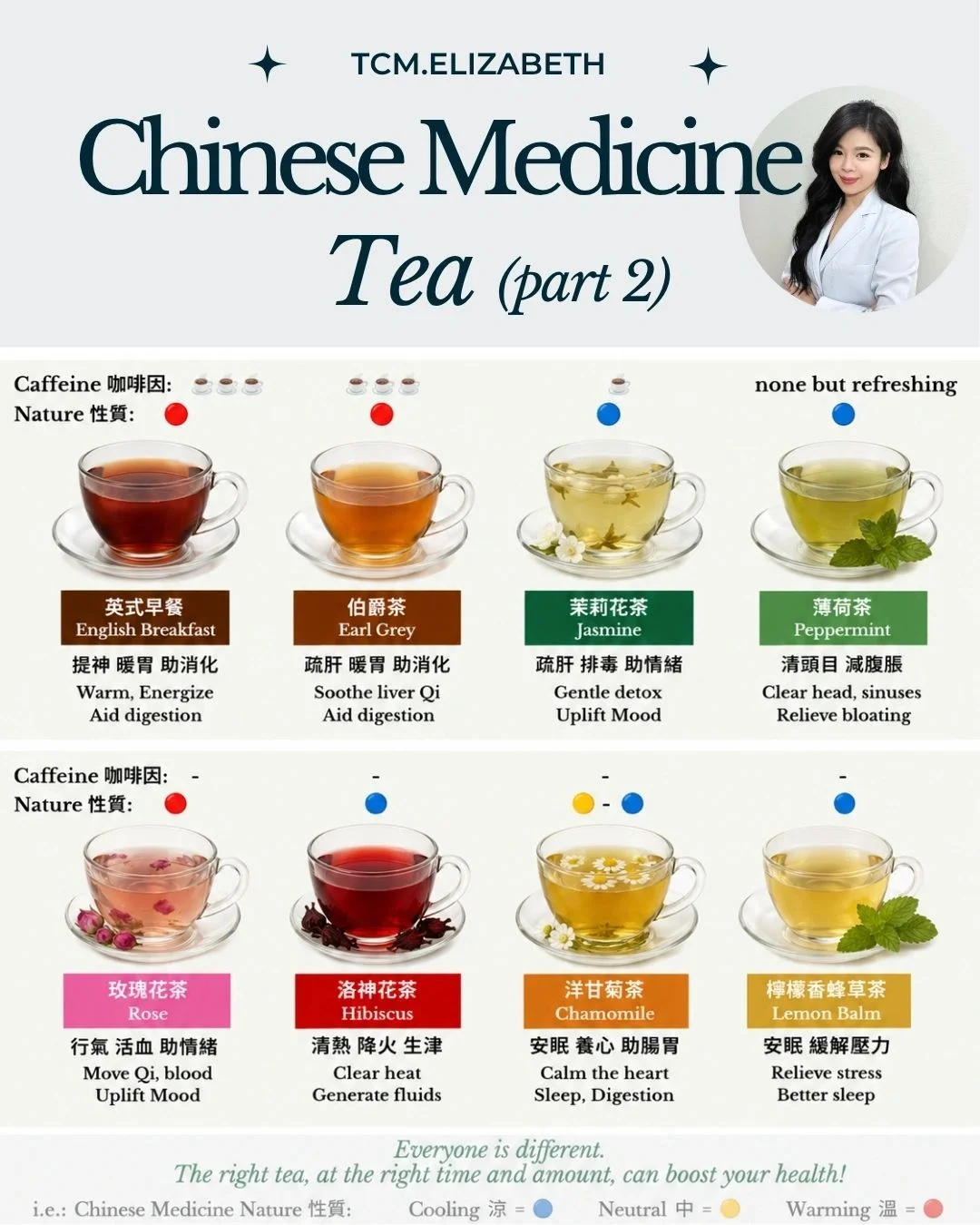
Chinese Medicine Tea Guide: Find the Right Tea for Your Body Type
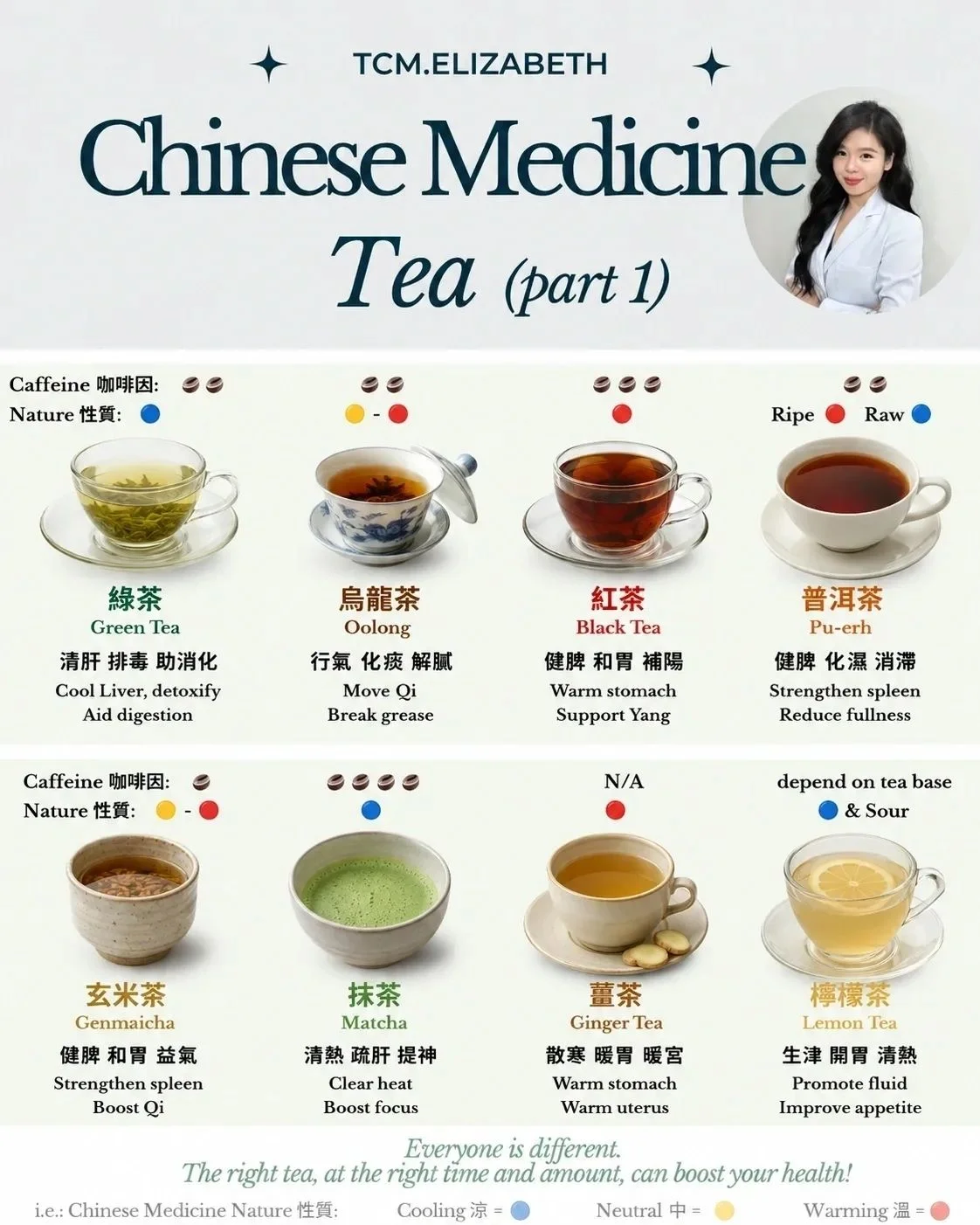
✨ Traditional Chinese Medicine (TCM): TEA GUIDE ✨
1. Green Tea
Caffeine: Medium TCM Nature: Cooling
Functions:
Clears internal heat → reduces acne, mouth ulcers, irritability
Cools the Liver → helps stress-related heat, headaches, red eyes
Detoxifies → supports skin clarity and heat removal
Reduces inflammation → helps heat-type bloating or heaty skin
Aids digestion of greasy foods → especially after fried or oily meals
Suitable For:
Qi Stagnation Type: stress, mood swings, chest or rib-side tightness, sighing often
Damp-Heat Type: thick yellow phlegm, oily skin, thick and yellow tongue coating
Phlegm-Damp Type: acne, sticky stool or urine smell, feeling of heaviness
Avoid If:
Yang Deficiency Type: cold hands/feet, tired, low energy, prefers warmth
Qi Deficiency Type: fatigue, short breath, low motivation
Cold Stomach Type: loose stools, bloating after cold food/drinks, cold sensation in abdomen
2. Oolong Tea
Caffeine: Medium TCM Nature: Neutral → slightly warming
Functions:
Breaks down grease → helps heavy meals
Moves Qi → reduces chest/ abdominal tightness
Transforms phlegm → reduces heaviness, congestion
Light digestive support → helps mild stagnation
Suitable For:
Phlegm-Damp Type: heaviness in body, easily tired after eating, sticky tongue coating, slow digestion
Qi Stagnation Type: bloating after meals, mood affected by stress, tightness in ribs/stomach
Avoid If:
Yang Deficiency Type: cold limbs, low warmth in body, prefers heat
Cold Stomach Type: stomach pain relieved by warmth, loose stools, bloating with cold beverages
3. Black Tea
Caffeine: Medium–high TCM Nature: Warm
Functions:
Warms the Stomach & Spleen → good for cold digestion
Supports Yang Qi → boosts inner warmth
Improves circulation → helpful for cold hands/feet
Reduces cold-type loose stools
Suitable For:
Yang Deficiency Type: cold hands/feet, pale, swollen tongue
Qi Deficiency Type: fatigue, weak voice, short breath, low motivation
Cold Stomach Type: loose stools, bloating after cold food/drinks, cold sensation in abdomen
Avoid If:
Heat Type: acne, ulcers, sore throat, red and irritated skin, swollen gum
Yin Deficiency: dry mouth at night, insomnia, hot flushes, warm palms
4. Pu-erh Tea
Caffeine: Medium TCM Nature: Ripe Pu-erh → Warming; Raw Pu-erh → Cooling
Common Functions (Both Raw & Ripe Pu-erh)
Strengthens Spleen — reduces fullness, gas, belching
Transforms dampness — helpful for heavy limbs, bloating, sticky stool
Reduces food stagnation
Ripe Pu-erh: Additional Warming Functions:
Suitable For:
Phlegm-Damp Type: phlegm in throat, sticky stool, heavy body
Mild Yang Deficiency Type: cold hands/feet, morning fatigue, prefers warmth
Weak Stomach Type: fullness after meals, burping, bad breath
Avoid If: Heat Type: acne, ulcers, red face/skin, swollen gums
Raw Pu-erh: Additional Cooling Functions:
Suitable For:
Damp-Heat Type: acne, smelly stool or urine, sticky mouth feel
Avoid If: Cold Stomach Type: loose stools, cold abdomen, sensitive to cold drinks
5. Genmaicha
Caffeine: Low TCM Nature: Neutral → mildly warming
Functions:
Strengthens Spleen Qi → supports digestion
Soothes stomach discomfort
Gentle energy without over-stimulation
Suitable For:
Qi Deficiency Type: tiredness, low voice, low motivation
Spleen Deficiency Type: bloating, soft stools, poor appetite
Avoid If:
Very Heaty Type: irritation, acne, ulcers, red face/skin, swollen gums
6. Matcha
Caffeine: High TCM Nature: Cooling
Functions:
Clears internal heat & fire → acne, redness
Reduces inflammation
Boosts mental focus
Moves Liver Qi → for stress, premenstrual syndrome, tension
Suitable For:
Damp-Heat Type: acne, oily skin, sticky stool
Qi Stagnation Type: headaches, premenstrual syndrome, mood swings, rib-side tightness
Avoid If:
Cold Stomach Type: loose stools, bloating after cold food/drinks, cold sensation in abdomen
Palpitations, Insomnia
7. Ginger Tea
Caffeine: No TCM Nature: Warm → hot
Functions:
Warms Yang Qi → increases internal warmth
Dispels cold from body, uterus, stomach
Improves circulation → good for cold limbs
Relieves cold-type menstrual cramps (pain better with heat)
Reduces nausea
Suitable For:
Yang Deficiency Type: cold hands/feet, low energy, prefers warmth
Qi Stagnation due to Cold: menstrual cramps relieved by warmth, cold-related abdominal pain, dull pain improving after hot drinks
Avoid If:
Heat Type: sore throat, acne, ulcers, red face/skin, swollen gums
Yin Deficiency Type: night sweat. dryness, thin body with warm palms
8. Lemon Tea
Caffeine: Low–medium (depending on tea base) TCM Nature: Cooling, sour
Functions:
Promotes fluid production → helps relieve dry mouth and tongue
Moistens the lungs → aids in phlegm reduction and cough relief, especially for coughs caused by lung heat
Clears heat → helps the body reduce internal heat and eliminate toxins
Strengthens the spleen → the sour taste helps improve appetite, supports digestion, and boosts metabolism
Suitable For:
Phlegm-Damp Type: slow digestion. heaviness, sticky tongue coat
Damp-Heat Type: yellow phlegm, bad breath, smelly sweat
Avoid If:
Cold Stomach Type: cold belly pain, loose stools, bloating with cold drinks
Acid reflux
🍵 How to Use & When to Drink
Most teas can be enjoyed 1–2 cups per day. For digestive support, tea is best taken after meals. For teas with higher caffeine content (e.g., green tea, matcha, black tea, raw Pu-erh), drink them in the morning or before noon to avoid affecting sleep.
📌 Disclaimer:
This information is for general wellness and educational purposes only. Tea recommendations do not replace personalised Chinese medicine diagnosis or treatment. If you have a chronic condition, are pregnant, having irregular periods, or are unsure of your body type, please consult a qualified TCM practitioner.
Content on this site is general health education. It does not replace individual diagnosis or treatment by a doctor or registered Chinese medicine practitioner. In an emergency call 999 or go to A&E.