Tea Guide Part 2: Western & Herbal Teas Through Chinese Medicine
TCM Tea Guide Part 2: Western & Herbal Teas Through Chinese Medicine
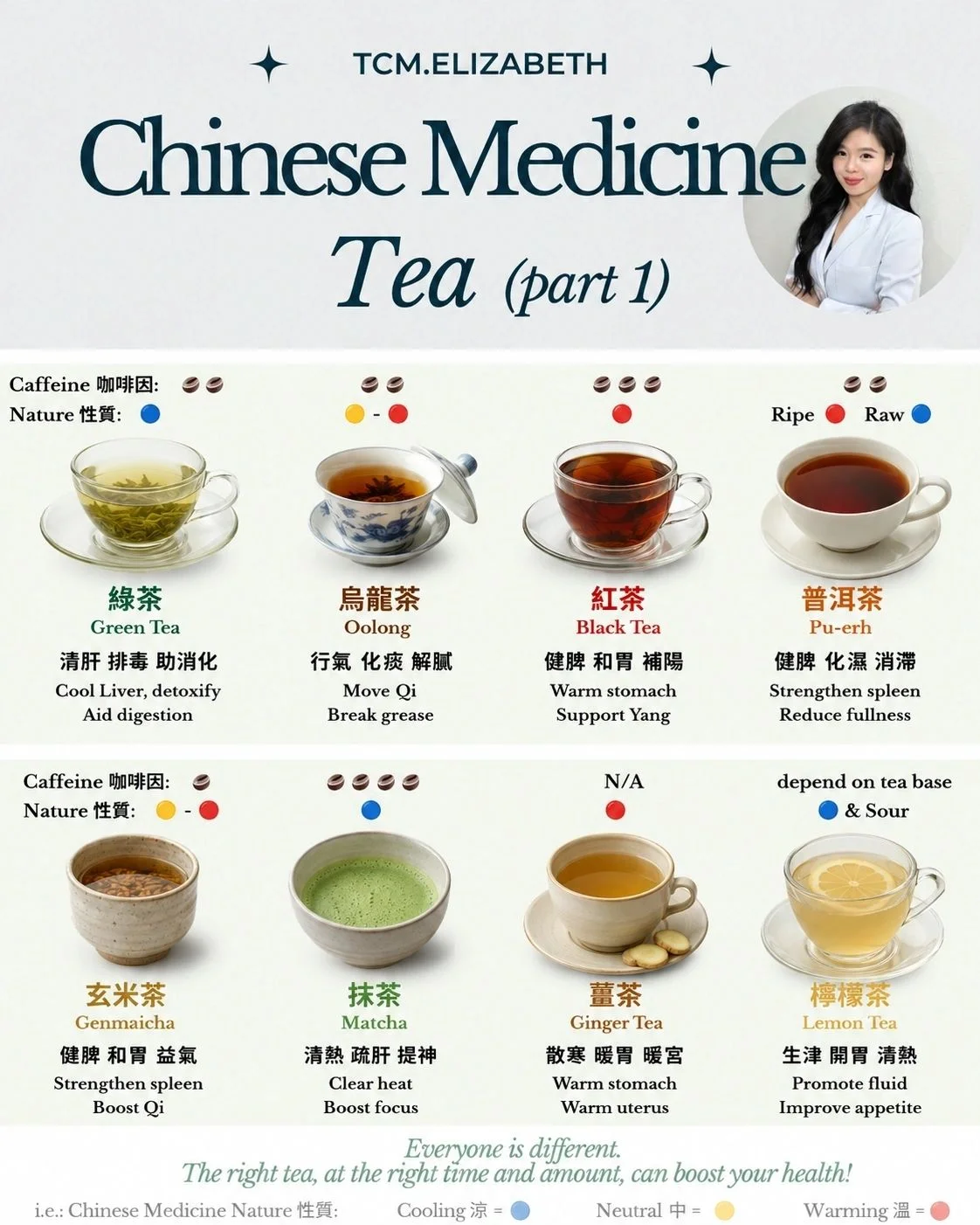
In Part 1 of our tea guide, we explored traditional tea varieties including Green Tea, Oolong Tea, Black Tea, Pu-erh Tea (Ripe & Raw), Genmaicha, Matcha, Ginger Tea, and Lemon Tea.
If you would like to read it first, visit: https://elizabethyau.com/blog/f/chinese-medicine-tea-guide-find-the-right-tea-for-your-body-type
In this article, we explore popular Western and herbal teas through the lens of Traditional Chinese Medicine (TCM). Using TCM principles—such as energetic temperature, Qi movement, and organ system balance—we can better understand how different teas may support different body types and health needs.
Many of these teas are not classical Chinese herbs, so the descriptions below are TCM-informed interpretations rather than strict classical indications.
Morning Teas for Energy and Circulation
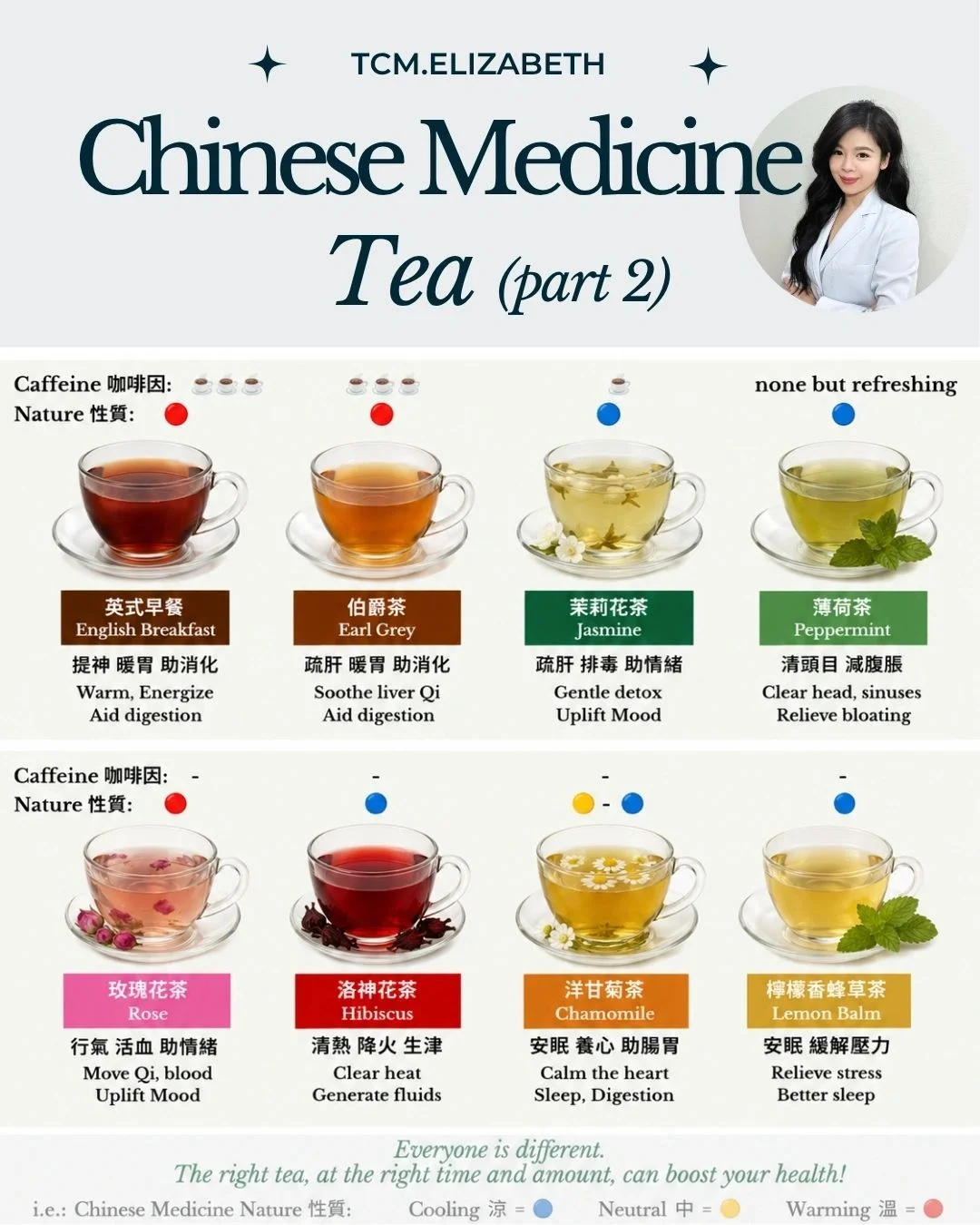
(1) English Breakfast Tea
Made from: Blend of black teas (Assam, Ceylon, Kenyan) Caffeine: Medium–high TCM Nature: Warming
Flavor & Usage
Full-bodied, malty, robust black tea
Often enjoyed with milk and sugar
Ideal for morning energy
Functions in TCM
Warming and energizing: dispels cold, improves circulation, supports morning alertness
Digestive support: stimulates gastric juices, helpful after heavy or greasy meals
Mental clarity: refreshes the mind and calms the spirit
Suitable For
Yang deficiency: cold limbs, fatigue
Qi deficiency: weak digestion, low energy
Cold stomach patterns: bloating after cold or raw foods
Avoid If
Heat patterns: acne, sore throat
Yin deficiency: night dryness, insomnia
(2) Earl Grey Tea
Made from: Black tea scented with bergamot oil Caffeine: Medium–high TCM Nature: Warming, aromatic
Flavor & Usage
Lighter black tea with citrusy, fragrant aroma
Often enjoyed straight, with lemon, or lightly with milk
Great for afternoon tea or calming moments
Functions in TCM
Aromatic Qi regulator: bergamot aroma moves Liver Qi, relieves stagnation
Stress reduction: aroma calms the mind and soothes anxiety (安神)
Mild digestion support and dampness reduction
Suitable For
Qi stagnation: stress, emotional tension
Phlegm-damp digestion: mild heaviness or fatigue
Afternoon or early evening gentle lift
Avoid If
Pronounced heat: mouth ulcers, irritability
Spleen deficiency with damp: loose stools
(3) Jasmine Tea
Made from: Green tea scented with jasmine flowers Caffeine: Low–medium TCM Nature: Slightly cooling
Functions
Gently regulates Liver Qi and uplifts mood
Clears mild internal heat
Harmonizes digestion
Gentle detox support: supports liver function and mild antioxidant activity, aiding natural cleansing
Suitable For
Qi stagnation: irritability, sighing
Mild heat patterns: red eyes, restlessness
Avoid If
Cold digestion: fatigue, cold stomach
Empty heat patterns: night sweats
Digestive and Stress-Relief Teas
(4) Peppermint Tea
Made from: Peppermint leaves Caffeine: None TCM Nature: Cool and aromatic
Functions
Releases wind-heat in early colds
Soothes Liver Qi stagnation from stress
Clears head and sinuses
Relieves bloating and digestive discomfort
Suitable For
Wind-heat colds: sore throat, mild fever
Stress headaches or tension
Digestive bloating or IBS-type symptoms
Avoid If
Yang deficiency: cold limbs, low energy
Acid reflux
(5) Rose Tea
Made from: Dried rose buds or petals Caffeine: None TCM Nature: Warm, slightly sweet
Functions
Moves Liver Qi and relieves emotional tension
Supports menstrual circulation
Warms digestion, reduces cold-type bloating
Suitable For
Liver Qi stagnation: mood swings, breast tenderness
Mild menstrual discomfort
Cold abdomen patterns
Avoid If
Heat with bleeding: heavy periods
Pregnancy: due to Qi- and Blood-moving properties unless advised by a practitioner
Cooling and Hydrating Tea
(6) Hibiscus Tea
Made from: Dried hibiscus flowers Caffeine: None TCM Nature: Cooling, slightly sour
Functions
Clears heat and cools the body
Generates fluids, relieves thirst
Supports hydration, especially in summer
Suitable For
Heat constitution: red face, irritability
Summer heat symptoms: thirst, sticky sweat
Avoid If
Cold constitution: cold limbs, diarrhea
Weak Spleen digestion
Pregnancy: unless advised by a practitioner
Calming Evening Teas
(7) Chamomile Tea
Made from: Chamomile flowers Caffeine: None TCM Nature: Neutral to slightly cooling
Functions
Calms the Shen (mind and spirit)
Supports relaxation and sleep
Soothes digestion
Suitable For
Stress-related insomnia
Mild anxiety or restlessness
Digestive discomfort
Avoid If
Damp-cold digestion: loose stools
Ragweed allergy
(8) Lemon Balm Tea
Made from: Lemon balm leaves Caffeine: None TCM Nature: Slightly cooling
Functions
Calms the Shen
Relieves stress-related digestive discomfort
Gently moves Qi and relaxes tension
Suitable For
Stress and mild insomnia
Digestive discomfort linked to emotional tension
Avoid If
Cold digestion: poor appetite or loose stools
How to Choose Tea According to TCM
Morning (Energy & Circulation)
English Breakfast Tea
Earl Grey Tea
Jasmine Tea
Afternoon (Digestion & Stress)
Peppermint Tea
Rose Tea
Evening (Relaxation & Sleep)
Chamomile Tea
Lemon Balm Tea
Cooling & Hydration
Hibiscus Tea
Most people benefit from 1–2 cups per day. Adjust strength and timing according to constitution and caffeine sensitivity.
Final Thoughts
Tea is an easy way to support balance in the body. Understanding the energetic nature of tea helps you choose drinks aligned with your body, lifestyle, and season. For personalized guidance, consult a qualified TCM practitioner.
Disclaimer
For educational and wellness purposes only. This is a TCM interpretation of Western teas, not a formal herbal prescription. Pregnant women, people with medical conditions, or those taking medications should consult a professional before regularly consuming herbal teas.
Content on this site is general health education. It does not replace individual diagnosis or treatment by a doctor or registered Chinese medicine practitioner. In an emergency call 999 or go to A&E.