Chinese Medicine: the analysis of stool (poo)
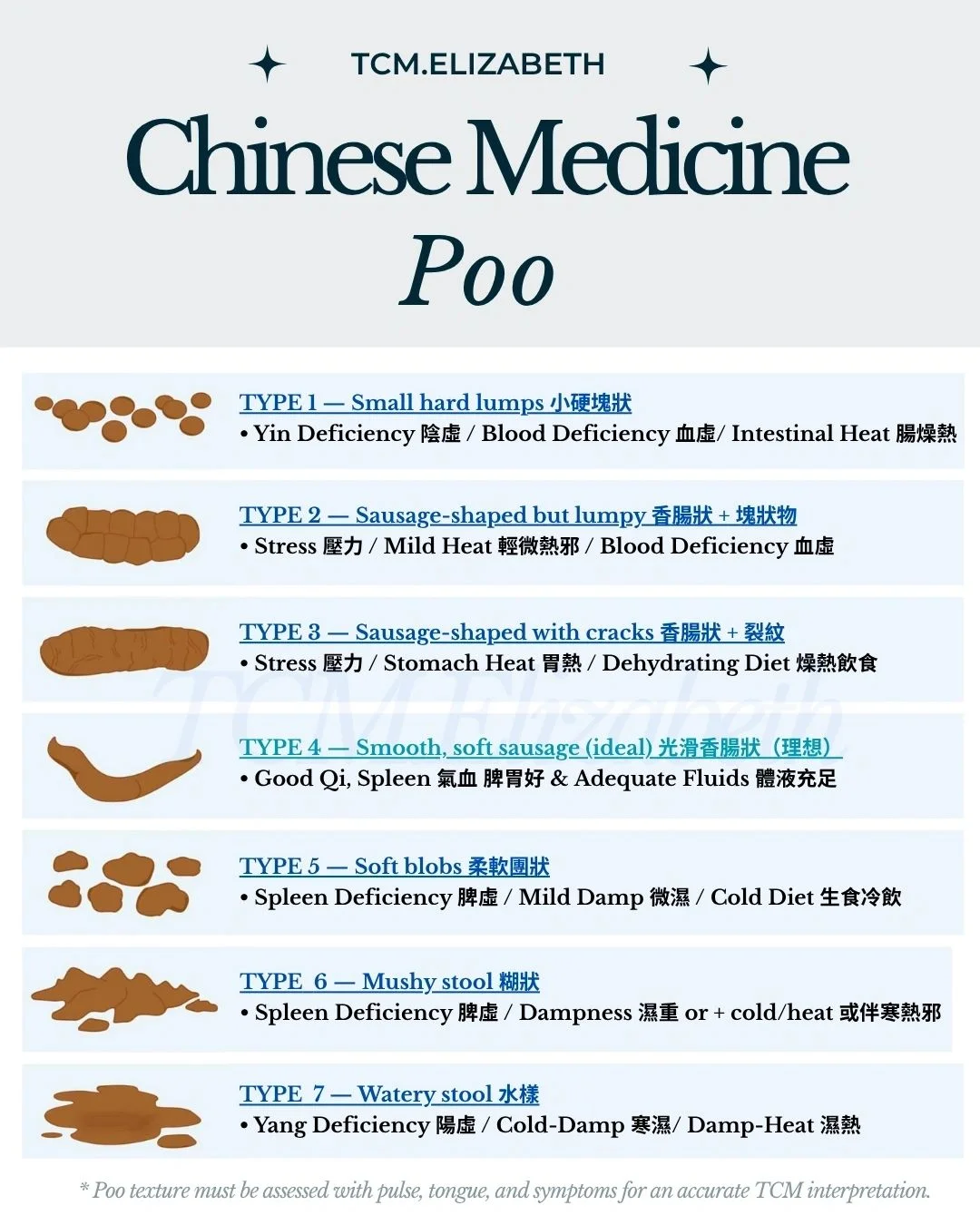
7 Types · Why It Happens · How to Improve (TCM Perspective)
🟤 TYPE 1 — Small hard lumps
Description: Hard, dry pellets, separate pieces, like rabbit droppings. Often difficult to pass → classic constipation.
WHY:
Yin Deficiency (Intestinal Dryness): Aging, chronic stress, late nights, or overworking can deplete body fluids, leading to dryness.
Blood Deficiency: Light periods, postpartum, restrictive diets, or chronic health depletion reduce the moisture needed to form stool.
Intestinal Heat: Frequent spicy food, fried food, coffee, alcohol → heat dries the stool.
Low hydration or excessive sweating from intense workouts.
HOW TO IMPROVE:
Increase yin-nourishing and hydrating foods such as pear, tofu, black sesame, spinach, soaked chia seeds.
Add blood-building foods: dates, goji berries, beetroot, dark leafy greens.
Reduce spicy, deep-fried, or very hot-natured foods.
Drink warm water instead of iced drinks.
Support stress regulation and rest.
🟤 TYPE 2 — Sausage-shaped but lumpy
Description: Large, lumpy, sausage-like stool. Still constipated, but less severe than Type 1.
WHY:
Qi Stagnation (stress): Emotional tension slows gut movement → stool stays too long and becomes dry. Liver Qi stagnation binding the Large Intestine.
Mild Heat: Regular intake of coffee, alcohol, spicy foods, or late-night eating.
Blood Deficiency: Reduced moisture due to chronic overwork or insufficient nourishment.
Irregular meal timing or eating too quickly.
HOW TO IMPROVE:
Gentle movement to move Qi: walking, stretching, yoga.
Eat warm, cooked foods to support digestion.
Add moisture-rich foods: soups, fruits, snow fungus, honey.
Reduce spicy food and alcohol.
Slow, mindful eating.
🟤 TYPE 3 — Sausage-shaped with cracks
Description: Formed stool but with dryness on the surface → cracks. Mild constipation.
WHY:
Qi Stagnation (stress): Emotional tension slows gut movement → stool stays too long and becomes dry. Liver Qi stagnation binding the Large Intestine.
Stomach Heat: Overeating hot-natured foods, late-night meals, or fast eating.
Dehydrating Diet: Too much coffee, alcohol, or not enough fluids.
Not drinking water throughout the day.
HOW TO IMPROVE:
Add hydrating foods: soups, steamed vegetables, lily bulbs, lotus root, fresh fruit.
Reduce coffee and alcohol.
Avoid eating late at night; regulate stress.
For Stomach Heat: add cooling foods (in moderation): Cucumber, mung beans, watermelon
🟤 TYPE 4 — Smooth, soft sausage (ideal)
Description: Smooth, soft, banana-shaped stool. Passes easily without straining.
WHY (Balanced):
Good Qi Movement: Healthy emotional regulation + regular movement.
Strong Spleen Function: Consistent meals and warming foods.
Adequate Fluids & Yin: Hydrated, well-rested, and balanced diet/lifestyle.
HOW TO MAINTAIN:
Continue eating warm, nourishing foods.
Maintain regular mealtimes.
Stay hydrated with warm water.
Keep a balanced pace of life with rest + movement.
🟤 TYPE 5 — Soft blobs
Description: Soft, separate blobs. Slightly loose, not fully formed.
WHY:
Spleen Qi Deficiency: Overthinking, chronic stress, or irregular eating weakens digestion.
Mild Dampness: Sugar, dairy, greasy foods cause heaviness.
Cold in Digestion: Raw foods, iced drinks, smoothies weaken Spleen Yang.
Eating too fast or too much fiber suddenly.
HOW TO IMPROVE:
Eat warm, cooked meals: soups + rice + meat-based dishes.
Reduce cold and raw foods + iced drinks.
Strengthen Spleen Qi with: Ginger, Millet, Red dates.
Avoid overeating and late-night meals; chew thoroughly.
🟤 TYPE 6 — Mushy stool
Description: Mushy, loose, unformed stool. May be urgent or smelly.
WHY:
Dampness: Eating a heavy diet (especially dairy, sugar, greasy foods).
Spleen Qi Deficiency: Weak digestive fire → poor food transformation.
Damp-Heat: spicy foods, oily foods, alcohol, humidity, emotional frustration → creates heat trapped with dampness → leads to urgency, odor, heaviness.
Cold-Damp: Raw foods, iced drinks, cold smoothies, or humid climate → weaken digestive Yang.
Stress affecting digestion (Liver attacking Spleen).
HOW TO IMPROVE:
Reduce dairy, sugar, greasy foods, and overeating.
Strengthen Spleen Qi: barley, ginger, red dates, Chinese yam.
For Damp-Cold: add warming spices: ginger, cinnamon (moderate).
For Damp-Heat: add bitter greens, chrysanthemum, mung beans (moderate).
Avoid cold drinks; drink warm water and keep abdomen warm.
🟤 TYPE 7 — Watery stool
Description: Completely liquid. Often urgent. Indicates diarrhea or poor absorption.
WHY:
Yang Deficiency: Aging, chronic fatigue, long-term overwork, cold limbs → digestion lacks warmth to transform fluids.
Cold-Damp: Raw foods, iced drinks, cold salads, or exposure to cold weather weaken the digestive fire.
Damp-Heat: Heavy, greasy, spicy foods or external pathogenic heat → causes burning, foul odor, urgency.
Chronic digestive weakness.
HOW TO IMPROVE:
Avoid cold or raw foods entirely.
Eat small, frequent meals.
Keep abdomen warm using heat packs or moxa.
For Damp-Cold: Use warming foods such as ginger tea, cinnamon, lamb, warm rice soup, and bone broth (moderate).
For Damp-Heat: avoid greasy and spicy foods; add more cooling/ bitter greens (moderate).
Disclaimer
Poo texture should always be assessed together with pulse, tongue, and accompanying symptoms for an accurate TCM interpretation.
If you are unsure, please consult a qualified TCM practitioner.
This guide is for general TCM understanding only and is not a diagnosis or treatment plan.
If symptoms become severe, persistent, or worsen, please seek care from a registered healthcare professional in person.
Content on this site is general health education. It does not replace individual diagnosis or treatment by a doctor or registered Chinese medicine practitioner. In an emergency call 999 or go to A&E.