Face Acne Location Map in Traditional Chinese Medicine
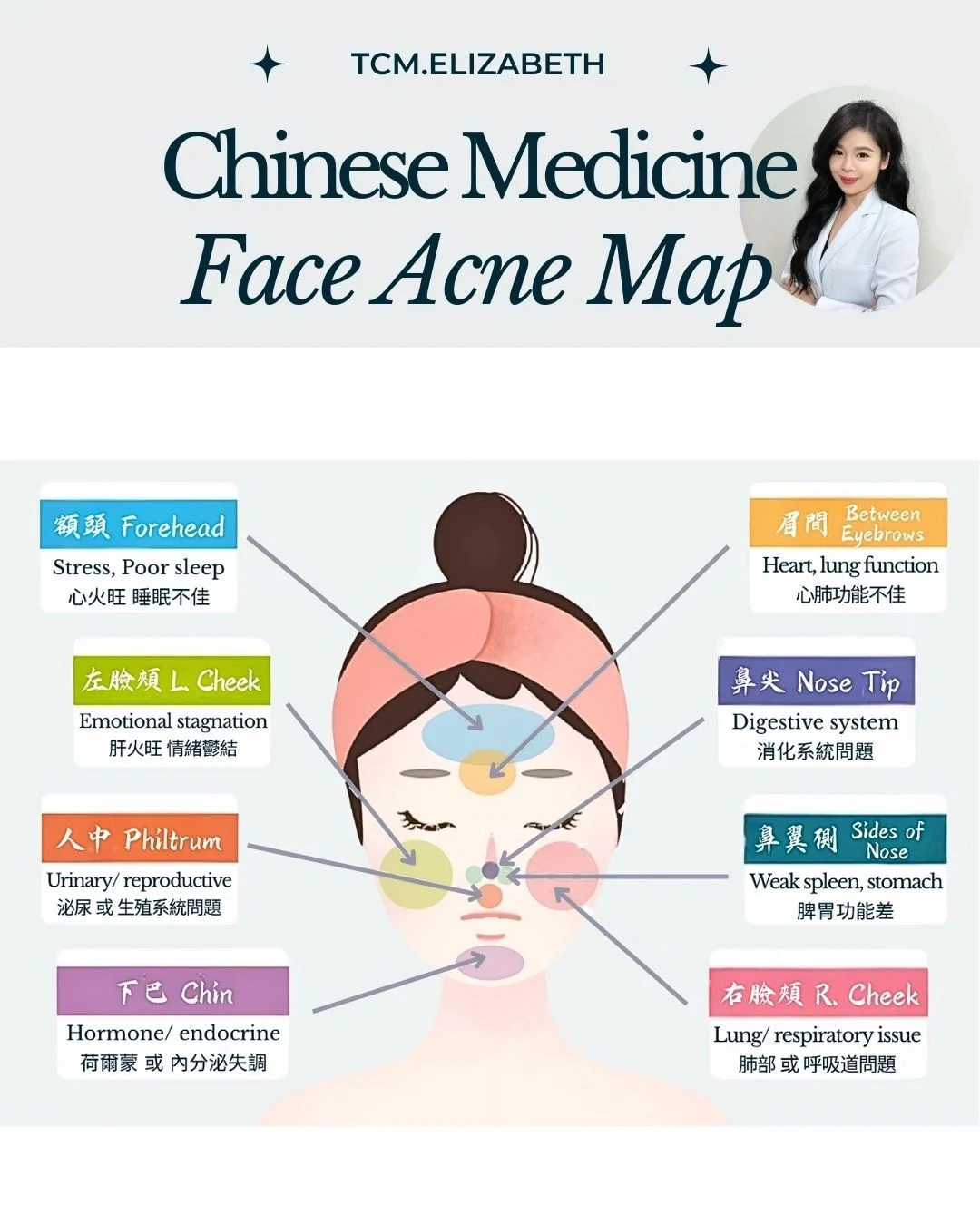
Acne Location Map in Traditional Chinese Medicine (TCM)
Why Does Acne Happen in TCM?
In Traditional Chinese Medicine, acne is viewed as a reflection of internal imbalance rather than a surface-level skin issue alone.
When acne is not mainly caused by local factors (such as inadequate cleansing, cosmetic irritation, or friction), and especially when it keeps recurring in the same area, TCM looks deeper into internal causes, including:
Accumulation of heat or damp-heat
Weak digestion and impaired fluid metabolism
Emotional stress disrupting Qi flow
Hormonal and menstrual imbalance
Phlegm or toxin accumulation
When these imbalances persist, the body may express them through the skin. This is why TCM places importance on where acne appears. Repeated breakouts in specific areas may offer clues about which internal systems are under strain.
The acne location map is a reference tool, not a diagnosis on its own. It must always be interpreted alongside overall symptoms, body constitution, and clinical findings.
Acne Location Map: What Different Areas May Indicate
1. Forehead Acne
Common pattern: Heart heat, poor sleep, mental overactivity
Why it happens: In TCM, the Heart governs the mind and sleep. Long-term stress, excessive thinking, irregular sleep, or excessive screen use can generate internal heat that rises to the forehead.
Common accompanying signs: Poor sleep, vivid dreams, irritability, anxiety, facial flushing.
Helpful adjustments: Earlier bedtime, reduced night-time screen exposure, stress reduction, calming routines, avoiding spicy, fried, and stimulating foods.
2. Acne Between the Eyebrows
Common pattern: Heart and Lung imbalance
Why it happens: This area reflects the chest. Emotional tension, shallow breathing, poor posture, or prolonged sitting may impair Qi and blood circulation in this region.
Common accompanying signs: Chest tightness, shortness of breath, palpitations, frequent sighing.
Helpful adjustments: Deep breathing exercises, posture correction, gentle stretching, emotional regulation.
3. Nose and Sides of the Nose
Common pattern: Digestive imbalance (Spleen and Stomach)
Why it happens: Irregular meals, greasy or heavy foods weaken digestion, leading to dampness and heat that surface around the nose.
Common accompanying signs: Bloating, acid reflux, poor appetite, loose stools, fatigue after meals.
Helpful adjustments: Regular mealtimes, warm cooked foods, reducing fried, oily, sugary foods, and late-night eating.
4. Left Cheek Acne
Common pattern: Liver heat and emotional stagnation
Why it happens: The Liver is sensitive to emotional stress. Anger, frustration, pressure, and staying up late can cause heat to build and rise to the face.
Common accompanying signs: Irritability, mood swings, headaches, eye redness, PMS symptoms.
Helpful adjustments: Stress management, regular movement, emotional release, earlier sleep, limiting alcohol and spicy foods.
5. Right Cheek Acne
Common pattern: Weak Lung function
Why it happens: The Lungs govern the skin and defensive Qi. Allergies, pollution, smoking, or low immunity may affect this area.
Common accompanying signs: Frequent colds, allergies, dry skin, cough, sensitivity to air quality.
Helpful adjustments: Protecting skin from pollution, improving air quality, gentle aerobic exercise, avoiding smoking and excessive cold drinks.
6. Philtrum (Above the Upper Lip)
Common pattern: Urogenital imbalance or local irritation
Why it happens: This area may reflect urinary or reproductive health. It is also prone to irritation from shaving, waxing, or friction.
Common accompanying signs: Urinary discomfort, menstrual irregularities, sensitivity after hair removal.
Helpful adjustments: Adequate hydration, gentle grooming practices, proper skin repair, internal balance support.
7. Chin Acne
Common pattern: Hormonal imbalance, often linked to the menstrual cycle
Why it happens: The chin corresponds to the Kidney and reproductive system. Breakouts here often worsen before or during menstruation and tend to be deeper and more painful.
Common accompanying signs: Irregular periods, cramps, fatigue, lower back soreness, hormonal fluctuations.
Helpful adjustments: Regular sleep, reducing sugar and cold foods, supporting hormonal balance, tracking menstrual cycles.
How TCM Approaches Acne Treatment
In clinical practice, acne is never assessed by location alone. A TCM practitioner evaluates the whole picture, including:
Pulse
Tongue appearance
Full symptom pattern
Body constitution (heat, dampness, phlegm, deficiency, etc.)
Whether acne is stress-related, digestive-related, or hormonal
Acupuncture and Chinese herbal medicine are used to regulate internal imbalances, clear heat, resolve dampness, harmonize hormones, and support skin health from within.
Different acne patterns require different treatment strategies. These pattern distinctions will be explained in future posts.
General Habits That Help Prevent Acne
Regardless of acne location, these habits support healthier skin:
Remove makeup thoroughly every day
Avoid over-cleansing or harsh skincare products
Maintain regular sleep and meal times
Reduce foods that commonly trigger acne, especially during flare-ups, such as:
Fried foods
Oily or greasy foods
Spicy foods
Sugary foods and desserts
Alcohol and excessive caffeine
Manage stress and emotional tension
Support digestion with warm, balanced meals
Consistency matters more than perfection.
Disclaimer
This article is for educational purposes only and does not replace professional medical advice. Acne causes and treatments vary between individuals. Dietary and lifestyle recommendations should be adjusted according to personal constitution, skin condition, and stage of illness. Please consult a registered Traditional Chinese Medicine practitioner for individualized assessment and treatment.
Content on this site is general health education. It does not replace individual diagnosis or treatment by a doctor or registered Chinese medicine practitioner. In an emergency call 999 or go to A&E.