Chineses Medicine - Period Blood: Colors, Textures, Root Causes
Overview
Your period blood is like a monthly health report. Through the TCM lens, its color, thickness, and flow offer clues about Qi, Blood, Yin–Yang, and organ system balance. These patterns guide gentle, individualized care—never a one-size-fits-all judgment.
• This guide is educational, not a diagnosis.
• Always consider other signs: pulse, tongue, cycle length, quantity, odor, and accompanying symptoms.
• Consult a licensed TCM practitioner for personalized evaluation, especially if you suspect infection or experience severe pain, fever, or unusual discharge.
Normal Pattern (What “balanced” looks like)
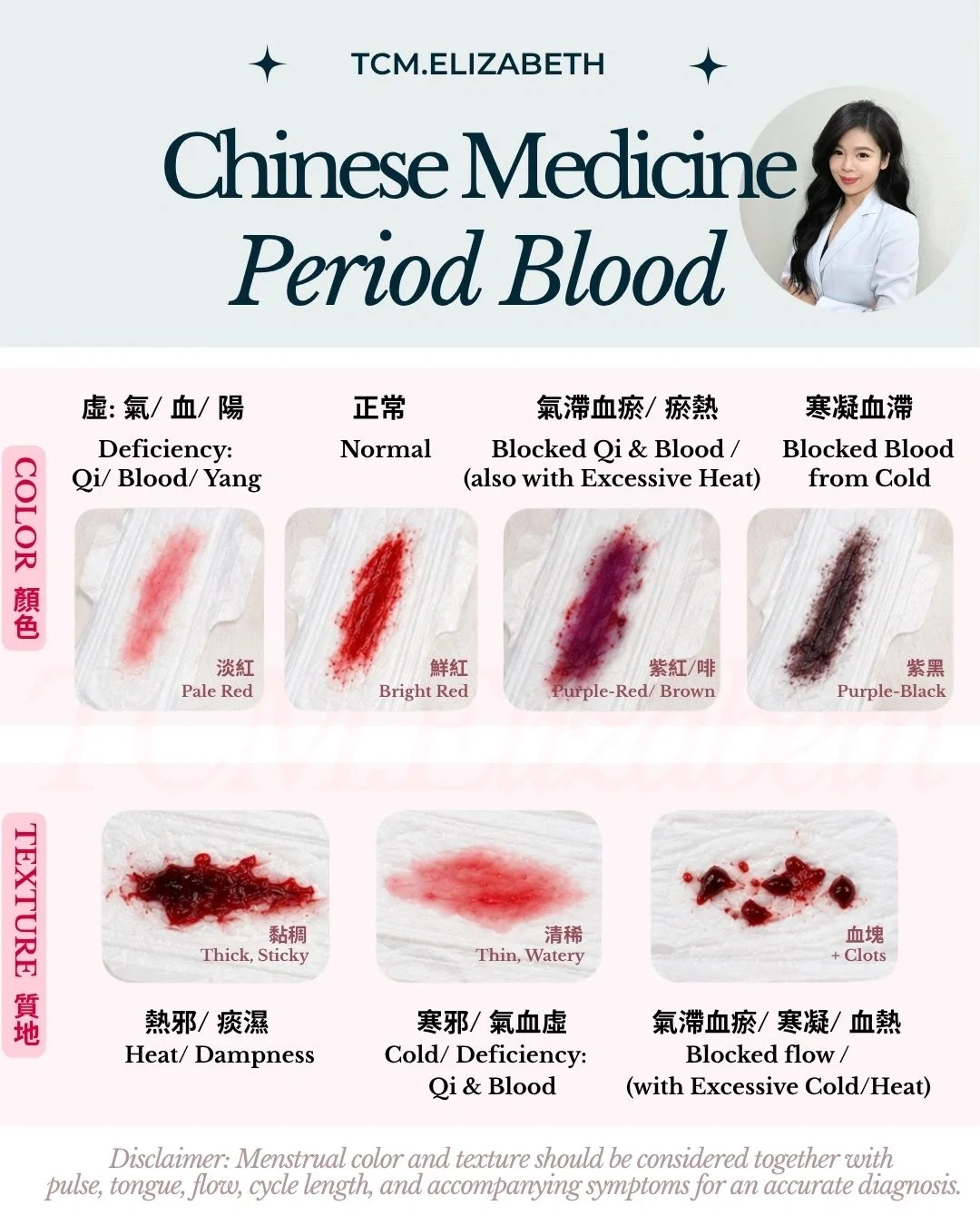
• Color: fresh, bright red
• Texture: smooth, free-flowing; neither thick nor watery
• Flow: steady, moderate; minimal clotting; mild cramping at most
• Timing: on average about 28 days; anything between 21 and 35 days is considered within the normal range
• Duration: on average about 5–7 days; each period lasting around 3–7 days is generally considered normal
What this suggests in TCM: Qi moves Blood smoothly, the Chong and Ren vessels are harmonious, and there is no pronounced Cold, Heat, Stagnation, or Deficiency.
When Color or Texture Shifts (Common TCM Patterns)
1) Pale Red
• Possible reasons: Qi deficiency, Blood deficiency, or Yang deficiency
• Contributing factors: inadequate diet or prolonged dieting, chronic overwork or high stress without recovery, postpartum or post-illness depletion, frequent late nights, skipping breakfast, excessive cold/raw foods
• May present with: fatigue, dizziness, pale complexion, feeling cold, low appetite
• Gentle self-care:
• Favor warm, cooked meals (soups, stews, congee with beef/chicken; add dates/goji as appropriate)
• Keep regular sleep-wake times; aim for lights-out before 11 pm to nourish Blood
• Light movement 20–30 min most days (walks, tai chi); avoid overexertion
2) Purple-Red or Brown
• Possible reasons: Qi stagnation, Blood stasis, or Heat in the Blood
• Contributing factors: ongoing stress or emotional tension, sedentary work with few movement breaks, frequent late nights, excess alcohol or very spicy/fried foods
• May present with: breast tenderness, mood swings, distending pain before periods, darker clots, irritability
• Gentle self-care:
• Daily stress hygiene: 4-7-8 breathing, 5–10 min acupressure on LR3/LI4
• Moderate movement: brisk walks, cycling, or yoga 30 min to move Qi; take hourly standing breaks
• Reduce triggers: cut back on alcohol, very spicy/fried foods
3) Purple-Black
• Possible reasons: Cold congealing and obstructing Blood; chronic Yang deficiency
• Contributing factors: frequent iced drinks or large raw salads, exposure to cold/damp environments, sitting or lying on cold surfaces, insufficient warmth during menstruation, inadequate caloric intake in colder seasons, swimming or intense workouts in cold weather without proper layering
• May present with: sharp, fixed lower abdominal pain relieved by warmth, cold hands/feet, aversion to cold
• Gentle self-care:
• Warmth strategy: keep lower abdomen and low back warm; use a heat pack 15–20 min, 1–2×/day during cramps
• Warm, nourishing diet: soups/stews with ginger, cinnamon, scallion; avoid iced drinks and large raw salads
• Cycle-aware habits: avoid sitting on cold surfaces; wear socks/slippers on cold floors
4) Thick, Sticky
• Possible reasons: Heat or Damp-Heat accumulation
• Contributing factors: rich, greasy, or sugary diet; frequent alcohol intake; humid climate or poorly ventilated indoor spaces; chronic stress turning into internal heat; inadequate sleep
• May present with: heavy sensation, acne or oily skin, strong odor, thirst with preference for cold drinks
• Gentle self-care:
• Lighten the plate: emphasize steamed/poached foods, plenty of cooked greens; limit fried, creamy, and sugary items; avoid ice
• Sweat smart: 20–30 min moderate exercise 4–5×/week to transform Damp; shower soon after sweating
5) Thin, Watery
• Possible reasons: Cold invasion or Qi/Blood deficiency
• Contributing factors: excessive cold drinks or frozen foods, dieting or irregular eating, recovery after illness, chronic stress and overexertion, prolonged air-conditioned environments
• May present with: low energy, pale face, lower back soreness, loose stools, feeling chilly
• Gentle self-care:
• Build with staples: regular, nourishing meals (congee, root veggies, legumes, eggs); small snacks if appetite is low
• Gentle warmth: soups, stews, ginger tea; keep beverages warm; avoid iced drinks
• Strengthen center: abdominal breathing and light core work; prioritize consistent mealtimes
6) With Clots
• Possible reasons: stagnation from Cold, Heat, or Qi/Blood stasis; structural causes like endometriosis or fibroids may present with clots—seek evaluation
• Contributing factors: prolonged sitting with little movement, unmanaged stress, high intake of very spicy/fried foods or alcohol, exposure to cold during menstruation
• May present with: cramping or pain that eases after clots pass, irregular flow
• Gentle self-care:
• Match care to type: use heat for cold-type pain; use cooling teas (mint, chrysanthemum) for heat-type irritability
• Promote smooth flow: gentle movement during menses (walking, stretching); avoid long sitting
• Track and consult: if clots are frequent, large, or accompanied by severe pain/dizziness, see a practitioner
Quick Reference
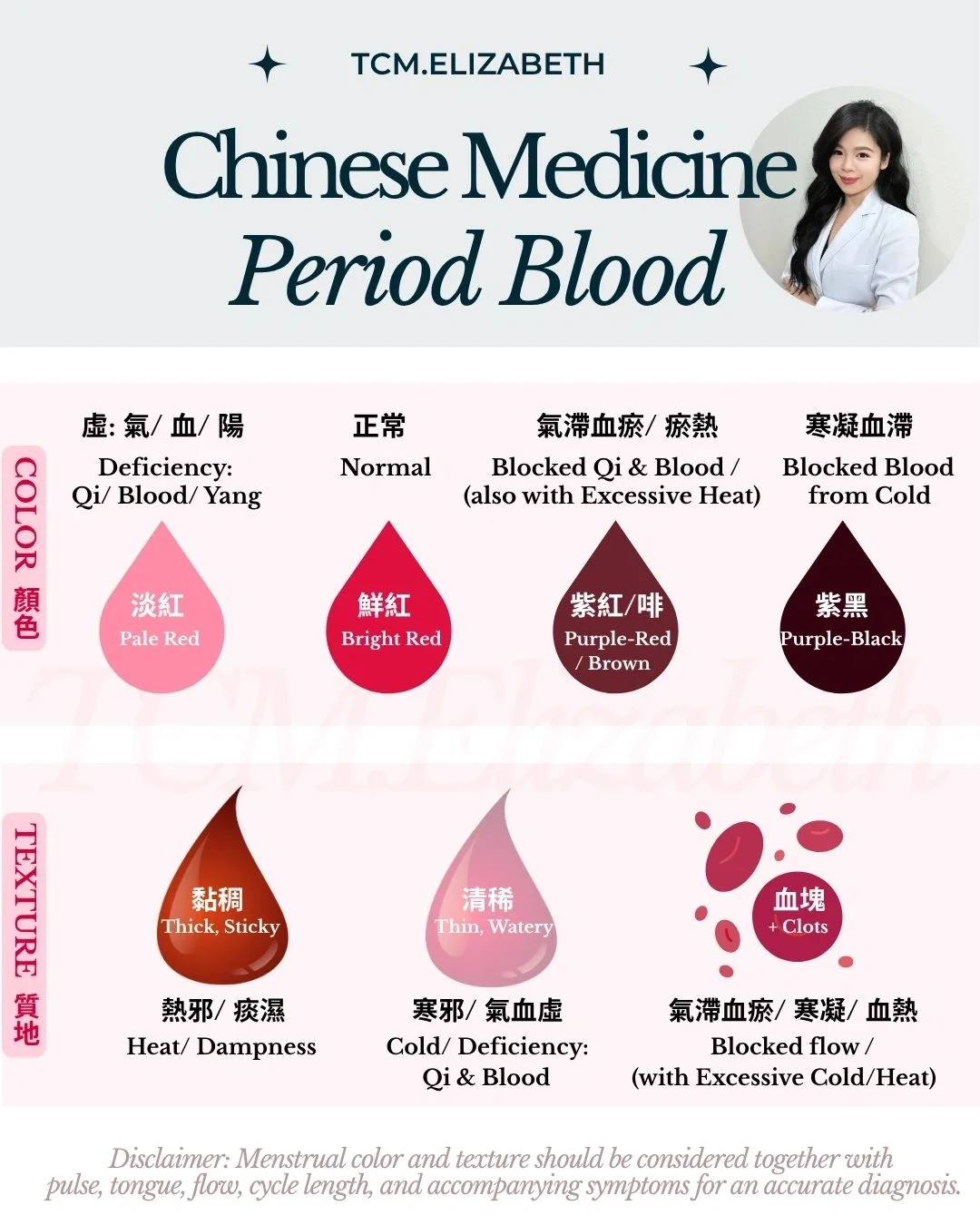
• Pale red → Qi/Blood/Yang deficiency
• Purple-red or brown → Qi & Blood stagnation or Heat
• Purple-black → Cold obstructing Blood
• Thick, sticky → Heat or Dampness
• Thin, watery → Cold or Qi/Blood deficiency
• With clots → Stagnation from Cold/Heat/Qi-Blood stasis
Practical Tips for Cycle Care
• Track patterns: color, texture, pain level, basal temperature, sleep, stress; bring notes to appointments
• Rhythm matters: consistent meals and sleep stabilize Spleen Qi and Liver Qi; reduce all-nighters
• Warmth wisely: use gentle heat for cold-type cramps; avoid overheating in heat-type patterns
• Move but don’t overdo: light walks, stretching, or yin yoga support smooth Qi
• Red flags: soaking a pad/tampon hourly, foul odor, fever, severe or worsening pain—seek medical care
Disclaimer
Educational and wellness purposes only. This TCM-informed guide is not a prescription. If you are pregnant, have chronic illness, are trying to conceive, or take medication, consult a qualified medical or TCM professional before making changes.
Content on this site is general health education. It does not replace individual diagnosis or treatment by a doctor or registered Chinese medicine practitioner. In an emergency call 999 or go to A&E.