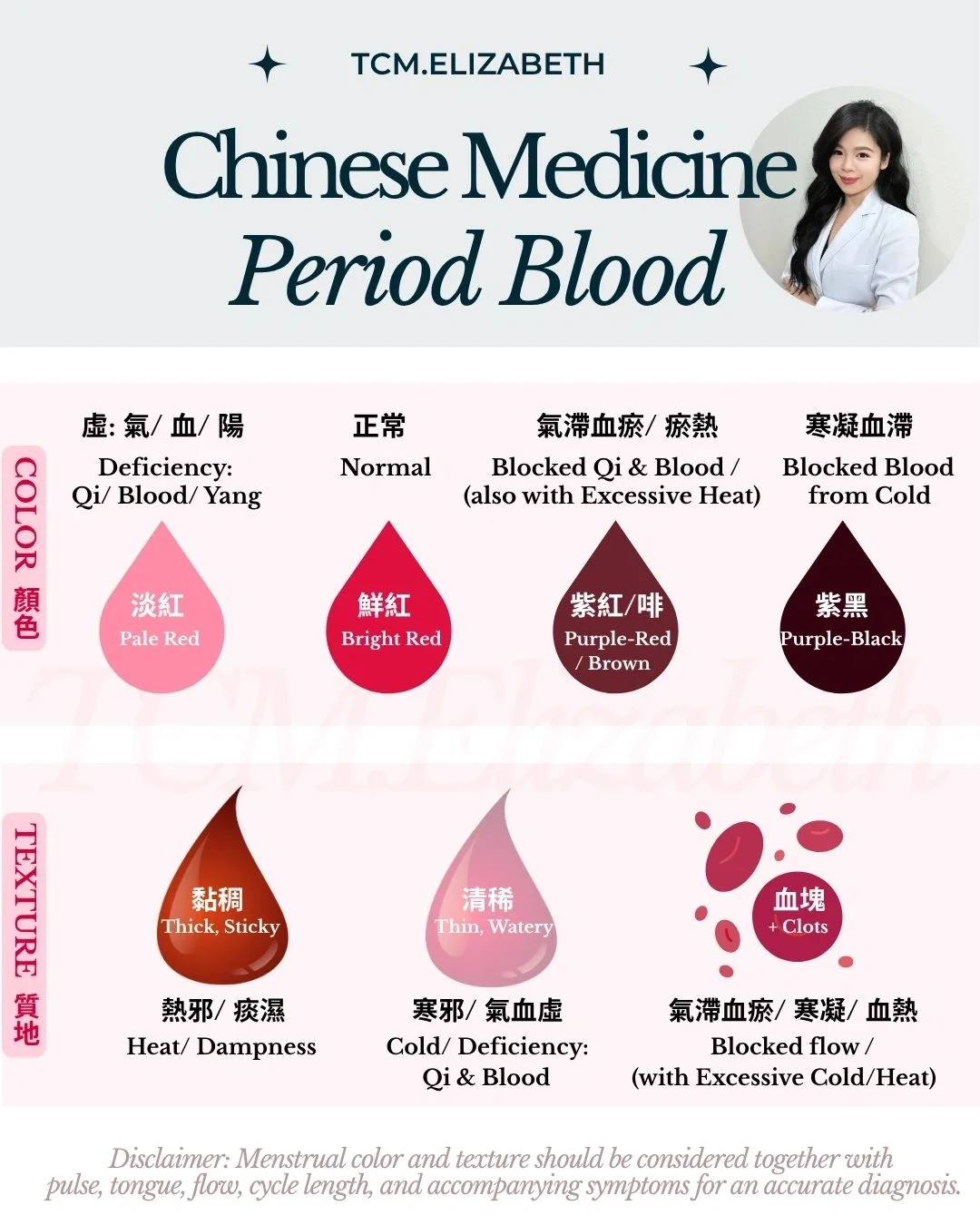
Vaginal Discharge & Chinese Medicine Patterns Guide
Overview
Your vaginal discharge is like a daily health report.
Through the TCM lens, its color, texture, flow/volume, and odor offer clues about Qi, Blood, Yin–Yang, and organ system balance. These patterns guide gentle, individualized care—never a one-size-fits-all judgment.
• This guide is educational, not a diagnosis. • Always consider other signs: pulse, tongue, cycle timing, quantity, odor, itching/irritation, pain, and urinary symptoms. • Consult a licensed TCM practitioner for personalized evaluation, and seek medical care promptly for fever, strong foul odor, severe itching or pain, new bleeding after sex, or suspected infection.
Normal Pattern (What “balanced” looks like)
• Color: clear to milky white • Texture: light, slippery; not overly thick or watery • Flow/volume: modest to moderate; varies with cycle phase; minimal or no irritation • Timing context: tends to increase around ovulation; may be scant after menses or in luteal phase
What this suggests in TCM: Spleen transport is steady, Dampness is minimal, and Kidney–Liver Yin–Yang are in relative harmony.
When Color or Texture Shifts (Common TCM Patterns)
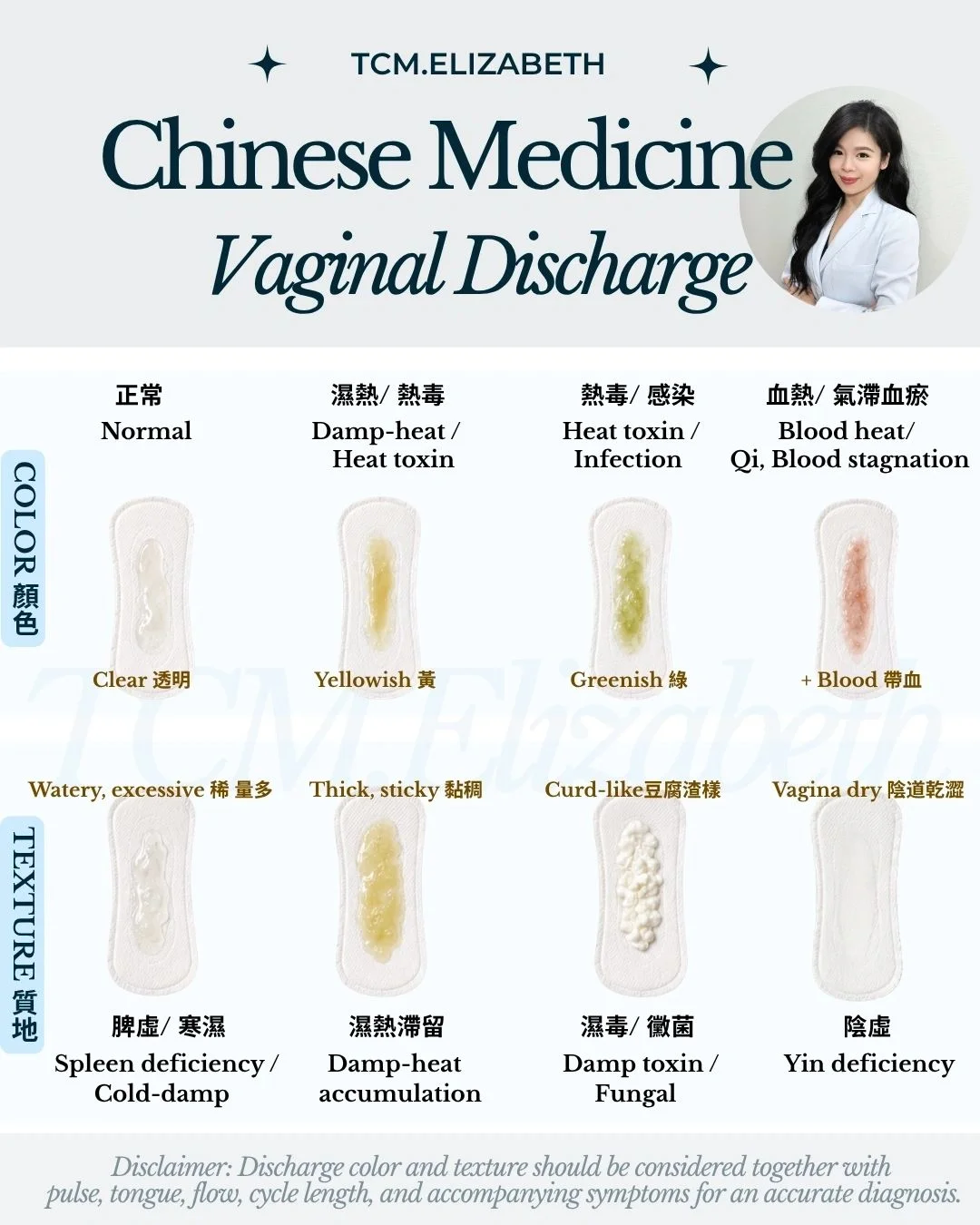
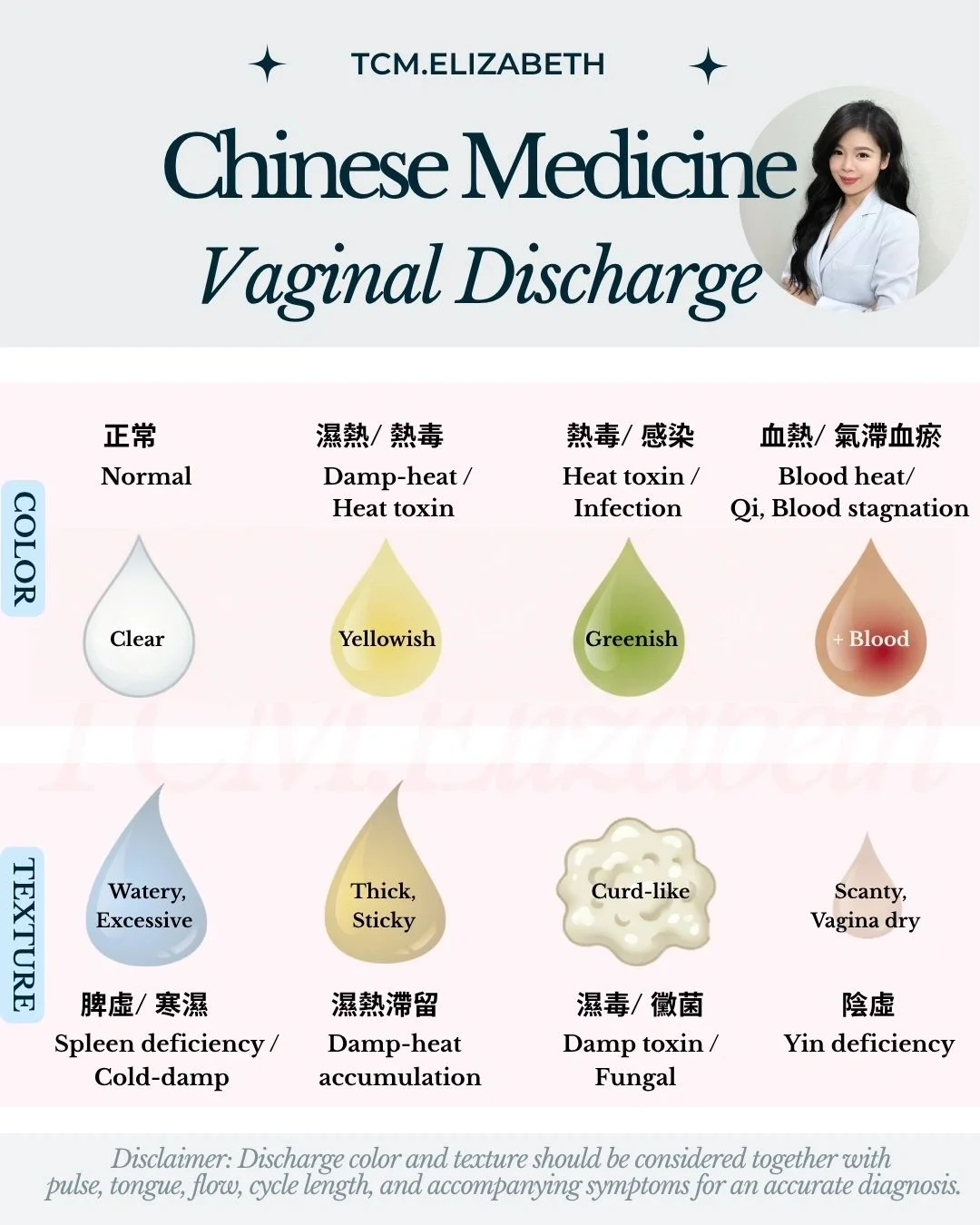
1) Clear / milky white — Normal
Possible reasons: Healthy vaginal microbiome; Qi and Yin are adequate; Dampness not excessive
Contributing factors: consistent sleep, balanced diet, breathable underwear, moderate movement
May present with: mild or no odor, light/slippery texture, modest volume without itching or burning
Gentle self-care: Maintain steady routines; keep the area dry and breathable; avoid harsh soaps or douching
2) Yellowish — Damp-heat / heat toxin
Possible reasons: Damp-heat accumulation in the lower Jiao
Contributing factors: fried/creamy/sugary foods, alcohol, insufficient sleep, high stress, hot/humid climate
May present with: thicker or sticky discharge, stronger odor, itching or burning
Gentle self-care: Emphasize steamed or poached foods and cooked greens; reduce greasy, spicy, sugary items and alcohol; prioritize sleep and stress care; do short, regular movement to promote circulation
3) Greenish — Heat toxin / infection
Possible reasons: Increased damp-heat accumulation in the lower Jiao, possible infection (e.g., bacterial or protozoal) with heat toxin pattern in TCM
Contributing factors: prolonged presentation of damp-heat condition, disrupted vaginal microbiome, recent antibiotics
May present with: greenish or frothy discharge, strong or foul odor, itching, burning, pain with urination or intercourse
Gentle self-care: Seek prompt medical evaluation; do not self-treat persistent or severe symptoms; keep the area dry and breathable; choose cotton underwear; avoid scented products
4) With blood — Blood heat / Qi & Blood stagnation
Possible reasons: Heat in the Blood or Qi/Blood stagnation causing spotting or blood-tinged discharge outside menses. May also reflect ovulation bleeding, hormonal fluctuations, or structural conditions such as polyps or fibroids.
Contributing factors: emotional stress, overwork, irregular sleep, very spicy foods or alcohol; unprotected sex or cervical irritation; mid-cycle ovulation events; perimenopausal hormonal shifts
May present with: intermittent spotting, breast tenderness, mood swings, cramps, darker mucus or small clots; post-coital spotting; mid-cycle light bleeding distinct from menses
Gentle self-care: Track timing relative to cycle; manage stress; practice moderate exercise to move Qi; avoid very spicy foods and alcohol. If spotting is frequent, heavy, painful, post-coital, or unrelated to cycle phase, see a clinician.
Texture Patterns
1) Watery, excessive — Spleen deficiency or cold-damp
Possible reasons: weakened Spleen Qi and Cold-Damp accumulation
Contributing factors: frequent iced drinks, large raw salads, prolonged air-conditioning or damp environments, irregular meals, overwork with poor rest
May present with: profuse thin discharge, feeling cold, fatigue, loose stools, abdominal bloating
Gentle self-care: Favor warm cooked meals; limit iced drinks and large raw salads; keep lower abdomen and feet warm; consider gentle moxibustion under guidance; take daily light movement
2) Thick, sticky — Damp-heat accumulation
Possible reasons: Damp-heat lodging in the lower Jiao
Contributing factors: rich or greasy diet, alcohol, chronic stress with short sleep, hot weather with poor ventilation
May present with: heavy sensation, acne or oily skin, yellowish discharge with stronger odor, thirst with preference for cool drinks
Gentle self-care: Lighten meals; reduce fried, creamy, sugary foods and alcohol; exercise moderately 4–5 times weekly; shower after sweating
3) Curd-like — Damp toxin / fungal
Possible reasons: fungal pattern (often yeast overgrowth) with Damp toxin
Contributing factors: recent antibiotics, high sugar intake, tight or synthetic underwear, prolonged dampness, diabetes risk
May present with: cottage-cheese-like discharge, intense itching, redness, swelling, burning
Gentle self-care: Seek medical evaluation for first or recurrent episodes; wear breathable cotton underwear; keep the area dry; avoid scented products
4) Scanty, vagina dry — Yin deficiency
Possible reasons: Yin and fluids depleted
Contributing factors: chronic stress, late nights, postpartum or post-illness depletion, perimenopause, long-term low-fluid or very spicy diet
May present with: vaginal dryness or itching without infection, night sweats, dry mouth, mild heat sensations in afternoon or evening
Gentle self-care: Support Yin with adequate sleep and stress reduction; include moistening foods such as pear, sesame, tofu, bone broth, and cooked greens; avoid overheating practices; consider guided herbal and acupuncture care
Quick Reference
Clear / milky white → Normal Yellowish → Damp-heat / heat toxin Greenish → Heat toxin / infection With blood → Blood heat / Qi and Blood stagnation Watery, excessive → Spleen deficiency / cold-damp Thick, sticky → Damp-heat accumulation Curd-like → Damp toxin / fungal Scanty, vagina dry → Yin deficiency
Practical Tips for Daily Care
• Track patterns: color, texture, volume, odor, itching, pain, relation to cycle, recent antibiotics, diet, and stress • Hygiene without over-stripping: lukewarm water is usually enough; avoid harsh soaps or douches • Breathable choices: cotton underwear; change out of sweaty clothes promptly • Red flags: fever, pelvic pain, foul odor, cottage-cheese-like discharge with intense itch, green or yellow frothy discharge, or bleeding after sex — seek medical care
Disclaimer
Educational and wellness purposes only. This TCM-informed guide is not a prescription. If you are pregnant, have chronic illness, are trying to conceive, or take medication, consult a qualified medical or TCM professional before making changes.
Content on this site is general health education. It does not replace individual diagnosis or treatment by a doctor or registered Chinese medicine practitioner. In an emergency call 999 or go to A&E.