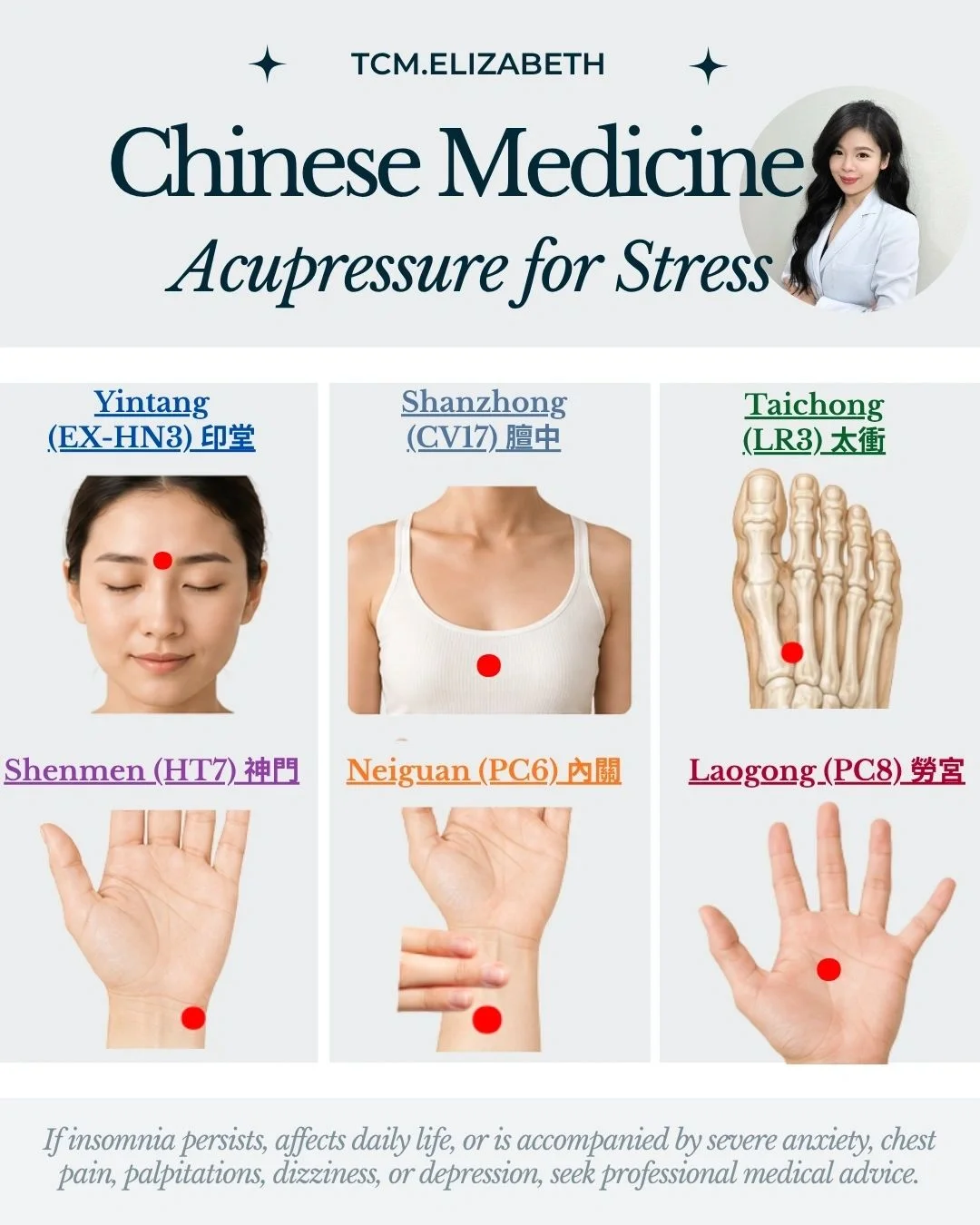
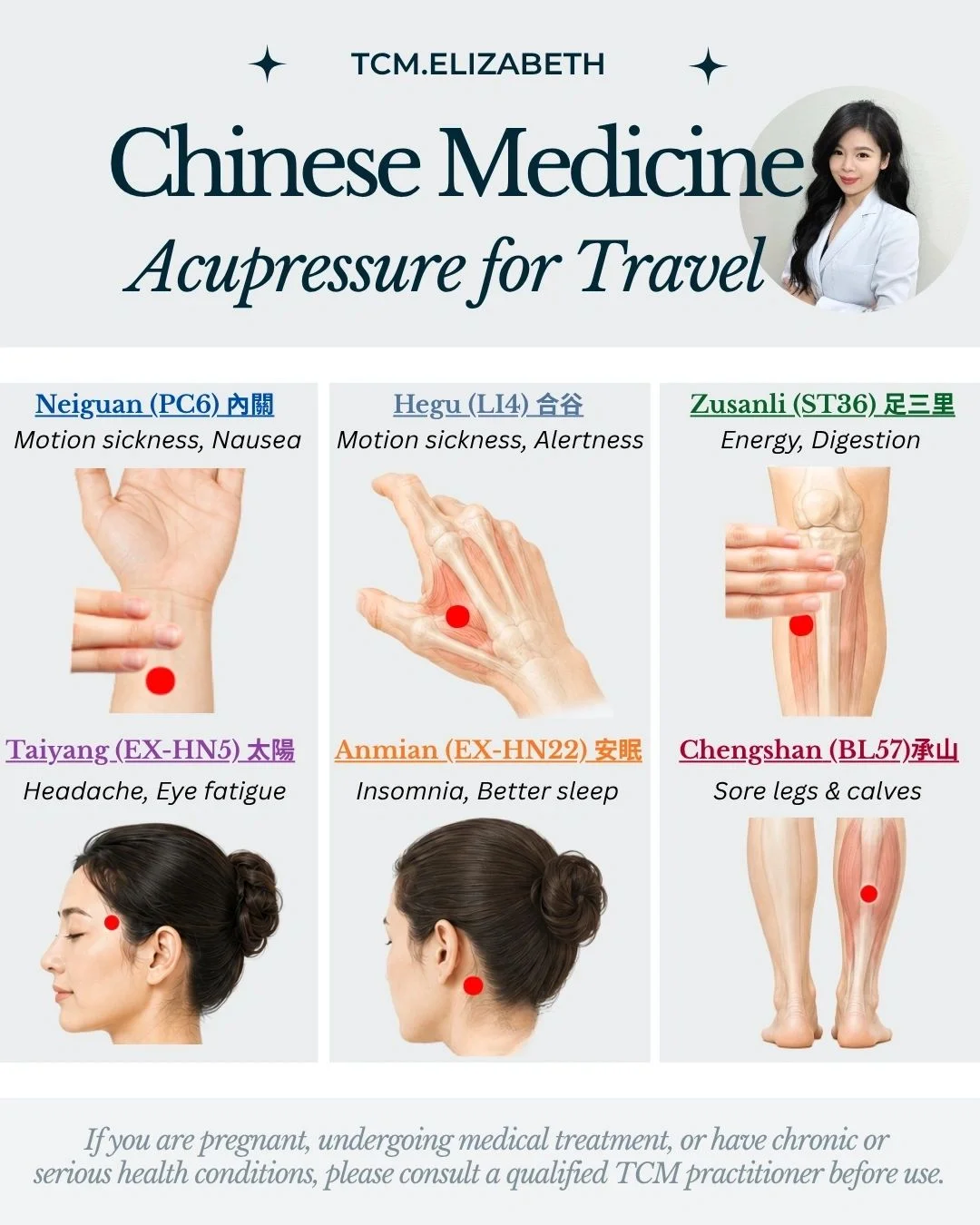
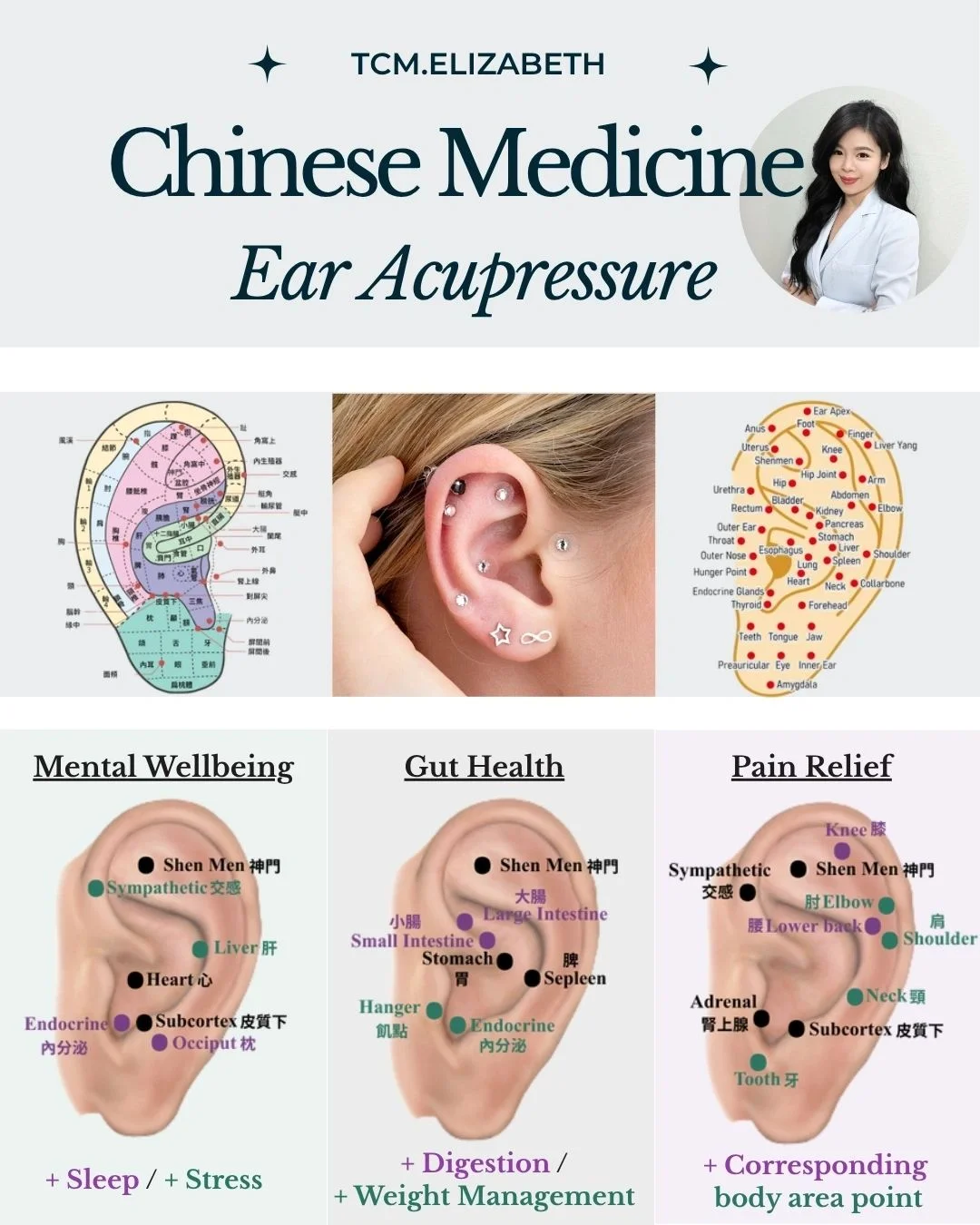
Common Acupressure Points for Relaxation & Sleep Support
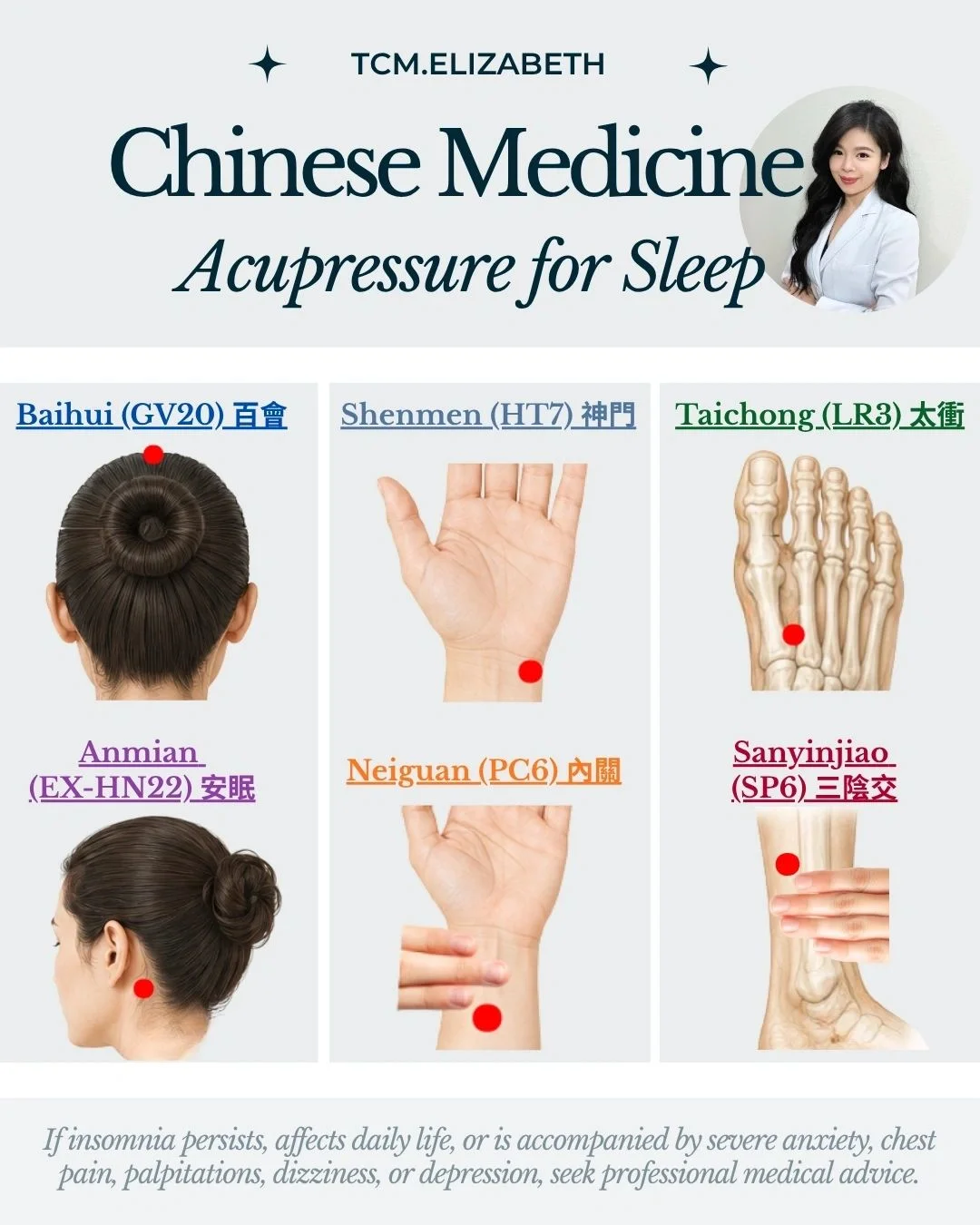
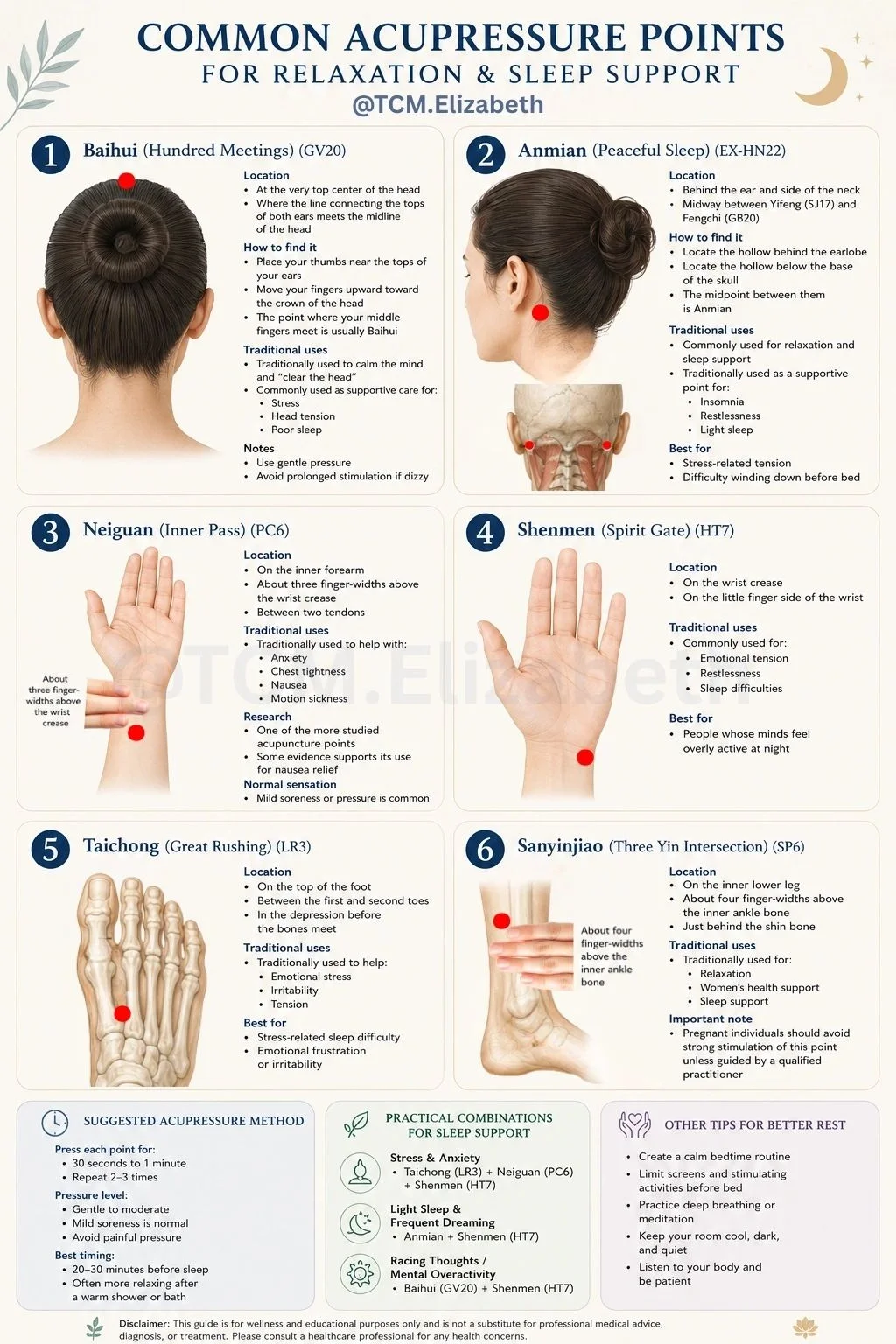
Common Acupressure Points for Relaxation & Sleep Support
Modern lifestyles, stress, anxiety, and irregular sleep schedules can all affect sleep quality. In Traditional Chinese Medicine (TCM), gentle acupressure is believed to help relax the body and calm the mind, making it a common wellness practice for sleep support. While acupressure is not a replacement for medical treatment, many people use it as part of a bedtime relaxation routine.
1. Baihui (Hundred Meetings) (GV20)
• Location: At the very top center of the head; where the line connecting the tops of both ears meets the midline of the head. • How to find it: Place your thumbs near the tops of your ears, move your fingers upward toward the crown of the head, and the point where your middle fingers meet is usually Baihui. • Traditional uses: Traditionally used to calm the mind and “clear the head.” Commonly used as supportive care for stress, head tension, and poor sleep. • Notes: Use gentle pressure; avoid prolonged stimulation if dizzy.
2. Anmian (Peaceful Sleep) (EX-HN22)
• Location: Behind the ear and side of the neck; midway between Yifeng (SJ17) and Fengchi (GB20). • How to find it: Locate the hollow behind the earlobe and the hollow below the base of the skull; the midpoint between them is Anmian. • Traditional uses: Commonly used for relaxation and sleep support; traditionally used as a supportive point for insomnia, restlessness, and light sleep. • Best for: Stress-related tension and difficulty winding down before bed.
3. Neiguan (Inner Pass) (PC6)
• Location: On the inner forearm, about three finger-widths above the wrist crease, between two tendons. • Traditional uses: Traditionally used to help with anxiety, chest tightness, nausea, and motion sickness. • Research: One of the more studied acupuncture points; some evidence supports its use for nausea relief. • Normal sensation: Mild soreness or pressure is common.
4. Shenmen (Spirit Gate) (HT7)
• Location: On the wrist crease, on the little finger side of the wrist. • Traditional uses: Commonly used for emotional tension, restlessness, and sleep difficulties. • Best for: People whose minds feel overly active at night.
5. Taichong (Great Rushing) (LR3)
• Location: On the top of the foot, between the first and second toes, in the depression before the bones meet. • Traditional uses: Traditionally used to help relieve emotional stress, irritability, and tension. • Best for: Stress-related sleep difficulty and emotional frustration or irritability.
6. Sanyinjiao (Three Yin Intersection) (SP6)
• Location: On the inner lower leg, about four finger-widths above the inner ankle bone, just behind the shin bone. • Traditional uses: Traditionally used for relaxation, women’s health support, and sleep support. • Important note: Pregnant individuals should avoid strong stimulation of this point unless guided by a qualified practitioner.
Suggested Acupressure Method
• Press each point for 30 seconds to 1 minute, and repeat 2–3 times. • Pressure level: Gentle to moderate; mild soreness is normal; avoid painful pressure. • Best timing: 20–30 minutes before sleep, and often more relaxing after a warm shower or bath.
Practical Combinations for Sleep Support
• Stress & Anxiety: Taichong (LR3) + Neiguan (PC6) + Shenmen (HT7) • Light Sleep & Frequent Dreaming: Anmian + Shenmen (HT7) • Racing Thoughts / Mental Overactivity: Baihui (GV20) + Shenmen (HT7)
Disclaimer
Acupressure is best viewed as a supportive wellness practice for relaxation and sleep, rather than a replacement for medical diagnosis or treatment. If insomnia becomes persistent, affects daytime functioning, or occurs alongside symptoms such as severe anxiety, chest pain, palpitations, dizziness, or depression, professional medical evaluation is recommended.
Individual responses to acupressure may vary. If pressing a point causes significant pain, discomfort, or worsening symptoms, stop stimulation and seek advice from a qualified healthcare professional.
Content on this site is general health education. It does not replace individual diagnosis or treatment by a doctor or registered Chinese medicine practitioner. In an emergency call 999 or go to A&E.