Ear Acupressure Therapy in Chinese Medicine: Sleep, Gut, Pain
1. What is Ear Acupressure Therapy?
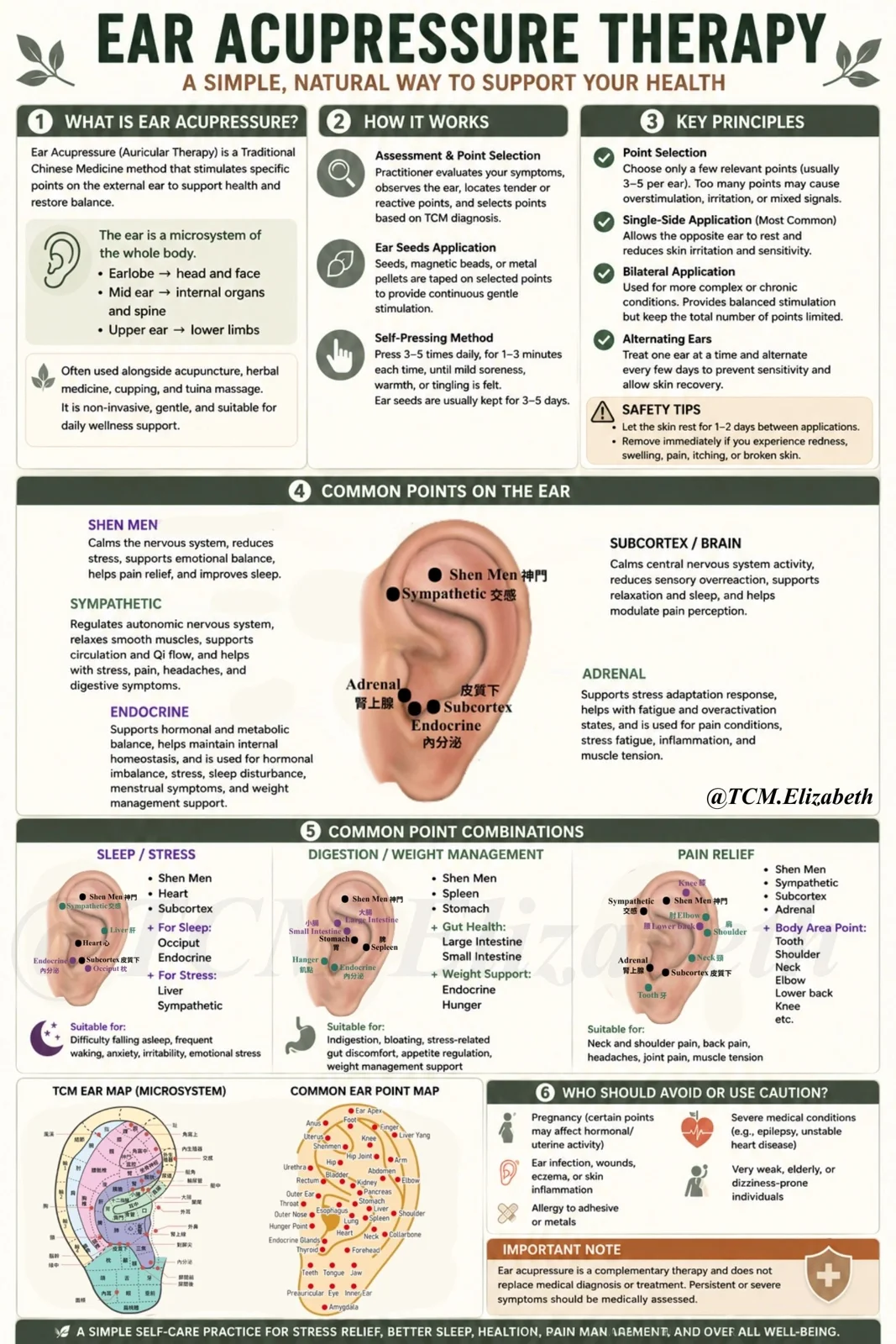
Ear Acupressure Therapy, also known as Auricular Therapy or Auriculotherapy, is a Traditional Chinese Medicine (TCM) method that stimulates specific points on the external ear to support health and restore internal balance.
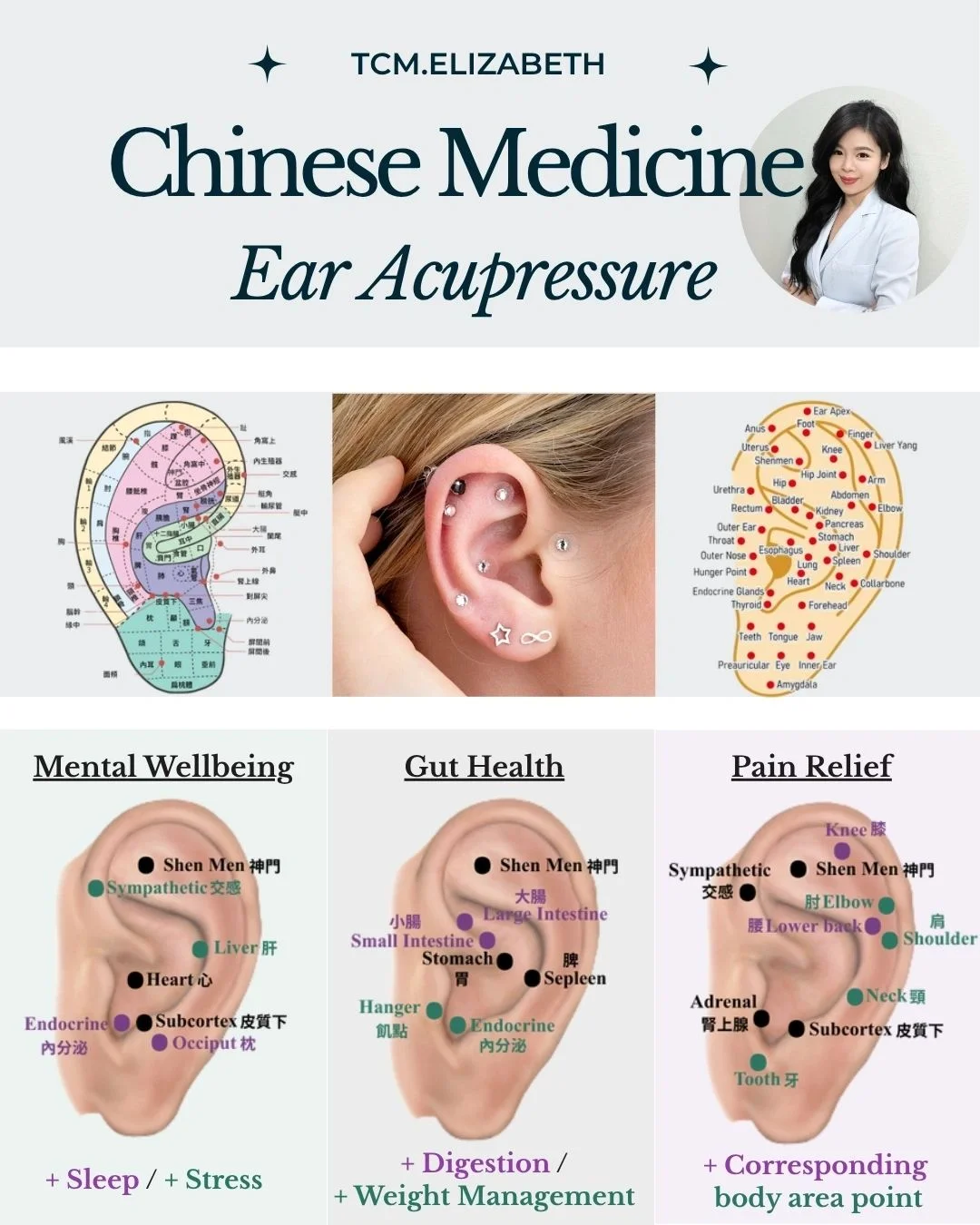
In TCM theory, the ear is considered a microsystem of the whole body. Different areas of the ear correspond to different organs and body regions. The ear map resembles an inverted fetus:
· Earlobe → Head and face
· Middle ear → Internal organs and spine
· Upper ear → Lower limbs
Because the ear is closely connected to the meridians and internal organs, stimulating ear points may help regulate Qi, Blood circulation, and overall body function.
Ear acupressure is commonly used together with:
· Acupuncture
· Herbal medicine
· Cupping
· Tuina massage
It is a gentle, non-invasive therapy often used for ongoing wellness support.
2. TCM Theory Behind Ear Acupressure
2.1 Meridian and Organ Relationship
TCM views the body as an interconnected meridian system linking the internal organs with the surface of the body. The ear reflects this system.
When the body is balanced:
· Qi and Blood nourish the ear normally
When imbalance occurs, the ear may show:
· Tenderness, Sensitivity, Discoloration, Dryness, Reactive points
By stimulating these points, ear acupressure aims to:
· Regulate organ function
· Calm the mind
· Improve circulation
· Relieve pain
· Restore balance
3. How Ear Acupressure Works
3.1 Assessment and Point Selection
A practitioner will:
· Assess symptoms and health history
· Observe the condition of the ear
· Locate tender or reactive points
· Select points based on TCM diagnosis
Treatment is individualized according to each person’s condition and constitution.
3.2 Ear Seed Application
Small seeds or beads are taped onto selected ear points, such as:
· Vaccaria seeds
· Magnetic beads
· Metal pellets
These provide continuous gentle stimulation between sessions.
3.3 Self-Pressing Method
Patients are usually instructed to:
· Press the ear seeds 3–5 times daily
· Press for 1–3 minutes each time
· Apply pressure until mild soreness, warmth, or tingling is felt
Ear seeds are typically kept on for 3–5 days.
3.4 Key Principles
Point Selection
· Usually only 3–5 relevant points are selected per ear
· More points do not necessarily improve results
· Too many points may cause: Overstimulation, Skin irritation, Mixed therapeutic signals
Single-Side Application
This is the most common method.
Benefits include:
· Allowing the opposite ear to rest
· Reducing skin irritation and sensitivity
· Minimizing redness from prolonged stimulation
Bilateral Application
Used more often for chronic or complex conditions.
Benefits include:
· More balanced stimulation
· Enhanced overall regulation
However, the total number of points is usually kept limited to avoid overstimulation.
Alternating Ears
A common clinical approach is to alternate between the left and right ear every few days.
This may help:
· Prevent skin sensitivity or allergy
· Reduce tolerance to stimulation
· Allow ear tissue to recover
3.5 Safety Tips
· Let the skin rest for 1–2 days between applications
· Remove the patches immediately if there is:
o Redness, Swelling, Significant pain, Itching, Broken skin
4. Commonly Used Ear Points
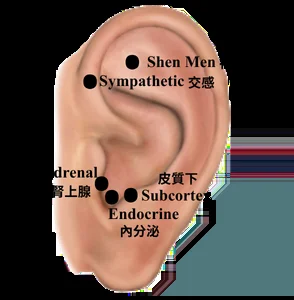
4.1 Shen Men
Functions:
· Calms the nervous system
· Reduces stress response
· Supports emotional balance
· Helps pain modulation
· Promotes sleep quality
Commonly used for:
· Anxiety, Insomnia, Emotional tension, Stress, Pain conditions
4.2 Sympathetic Point
Functions:
· Regulates autonomic nervous system balance
· Relaxes smooth muscle tension
· Supports circulation and Qi movement
Commonly used for:
· Stress-related symptoms, Muscle tightness, Headaches, Digestive discomfort, Pain
4.3 Endocrine Point
Functions:
· Supports hormonal balance
· Helps regulate metabolism
· Supports internal homeostasis
Commonly used for:
· Hormonal imbalance, Stress, Sleep disturbance, Menstrual symptoms, Weight management support
4.4 Subcortex Point
Functions:
· Calms nervous system activity
· Supports relaxation and sleep
· Helps reduce pain sensitivity
Commonly used for:
· Insomnia, Anxiety, Stress overload, Chronic pain
4.5 Adrenal Point
Functions:
· Supports stress adaptation
· Helps regulate inflammatory response
· Commonly used in pain protocols
Commonly used for:
· Pain conditions, Stress fatigue, Inflammation, Muscle tension
5. Common Ear Point Combinations
Ear acupressure is highly individualized in TCM. Even when two people have similar symptoms, the most suitable ear points may differ depending on:
· Constitution
· Underlying imbalance
· Stress levels
· Lifestyle
· TCM pattern differentiation
The following combinations are commonly used reference formulas rather than fixed prescriptions.
5.1 Sleep and Stress Support
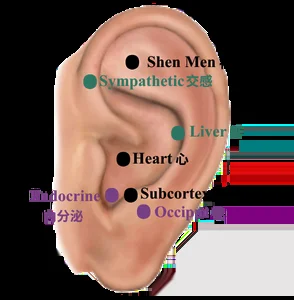
· Commonly used points: Shen Men, Heart, Subcortex
+ More related to sleep: Occiput, Endocrine
+ More related to stress: Liver, Sympathetic
Suitable for:
· Difficulty falling asleep
· Frequent waking or light sleep
· Anxiety and irritability
· Emotional stress
5.2 Digestion and Weight Management
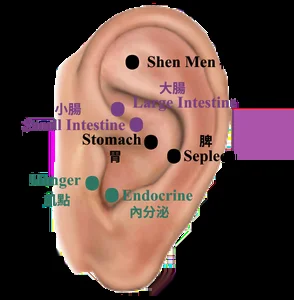
· Commonly used points: Shen Men, Spleen, Stomach
+ For digestive support: Large Intestine, Small Intestine
+ For weight management support: Endocrine, Hunger Point
Suitable for:
· Indigestion and bloating
· Stress-related digestive discomfort
· Appetite regulation
· Weight management support
5.3 Pain Relief
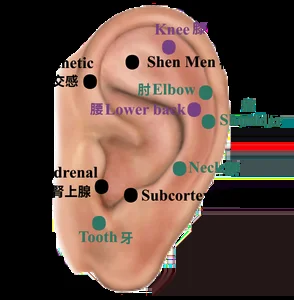
· Commonly used points: Shen Men, Sympathetic, Subcortex, Adrenal
+ Corresponding body area points may include: Tooth, Shoulder, Neck, Elbow, Lower back, Knee...
Suitable for:
· Neck and shoulder pain
· Back pain
· Headaches
· Joint pain
· Muscular tension
6. Who Should Use Caution?
Ear acupressure is generally safe, but caution is recommended for:
· Pregnant individuals
· People with ear infections, wounds, eczema, or skin inflammation
· Individuals allergic to adhesives or metals
· Severe medical conditions such as epilepsy or unstable heart disease
· Very weak, elderly, or dizziness-prone individuals
Always consult a qualified practitioner if unsure or if symptoms are complex.
7. Safety Note
Ear acupressure is a complementary therapy and does not replace professional medical diagnosis or treatment. Persistent or severe symptoms should be medically assessed.
8. Conclusion
Ear acupressure is a simple, gentle, and practical TCM therapy that supports the body through the ear’s microsystem connection. It is widely used for stress management, sleep support, digestion, pain management, and general wellness.
Content on this site is general health education. It does not replace individual diagnosis or treatment by a doctor or registered Chinese medicine practitioner. In an emergency call 999 or go to A&E.