Dairy & Plant-Based Milk from a Chinese Medicine Perspective
In Traditional Chinese Medicine (TCM), cow’s milk and other dairy products are nourishing but can be damp-forming, which may burden the Spleen and affect digestion if consumed in excess.
Plant-based milks, such as oat, almond, or rice milk, provide lighter alternatives and may support different aspects of health depending on your constitution.
Choosing the right type of milk can complement your body’s needs, but it’s important to remember: moderation is key. Too much of any milk, even plant-based, can lead to digestive discomfort or imbalance.
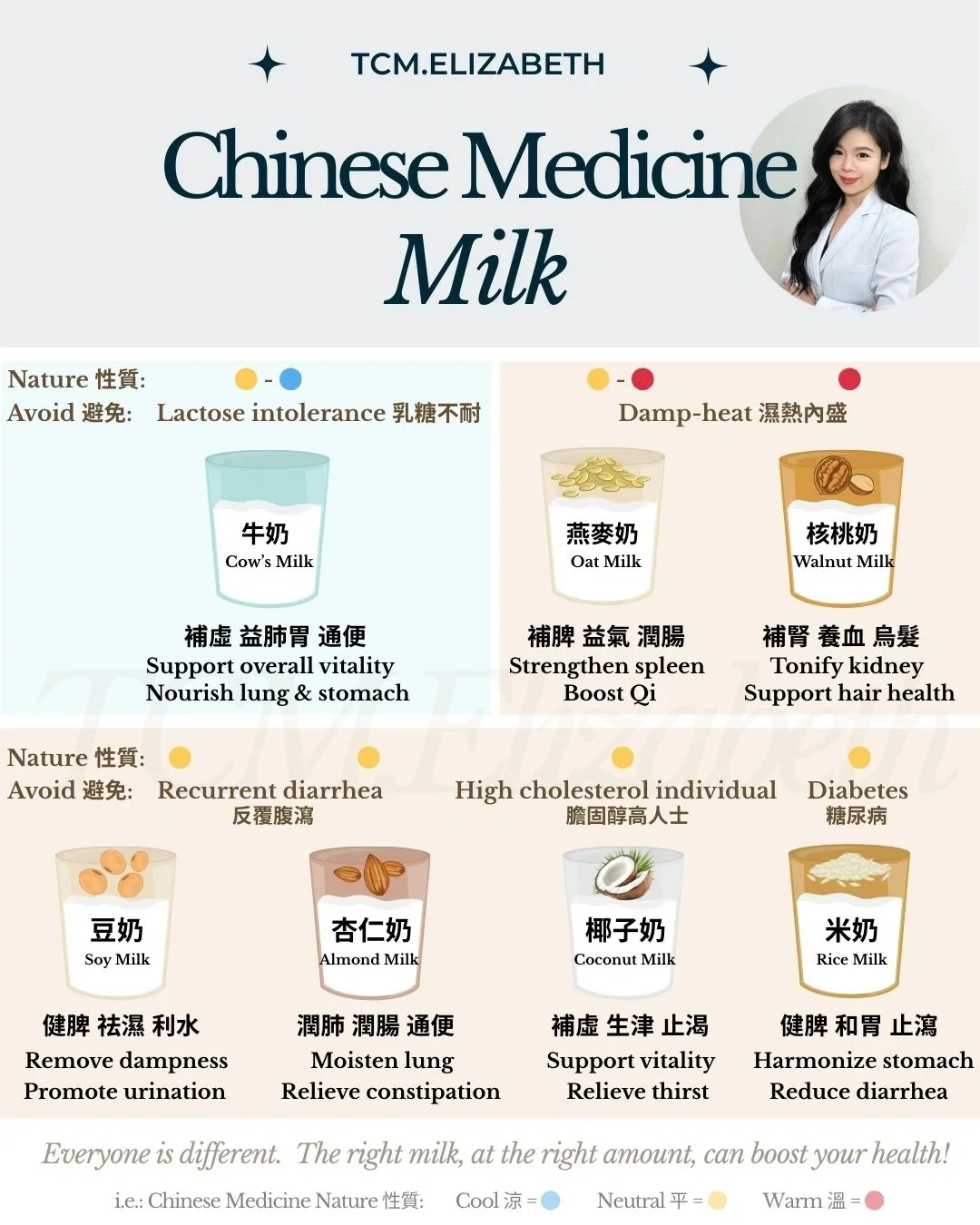
Cow’s Milk
Properties: Neutral (or slightly cooling)
Functions:
Tonifies deficiency and supports overall vitality
Nourishes the Lung and Stomach
Generates fluids and relieves dryness
Moistens the intestines and promotes bowel movements
Suitable for:
General weakness and fatigue
Constipation due to fluid deficiency
Individuals with a deficient constitution without obvious dampness or phlegm
Avoid:
Spleen–Stomach weakness or phlegm-damp constitution
People prone to bloating, diarrhea, or lactose intolerance
Those with cough and excessive phlegm, recurrent acne, or eczema
Oat Milk
Properties: Neutral to slightly warming
Functions:
Strengthens the Spleen and boosts Qi
Helps reduce spontaneous sweating
Moistens the intestines and supports bowel regularity
Suitable for:
Spleen Qi deficiency with fatigue
Excessive sweating
Chronic constipation
Avoid:
Internal damp-heat conditions
Acute diarrhea (if taken, only in small amounts)
Walnut Milk
Properties: Warming
Functions:
Tonifies the Kidneys and stabilizes essence
Nourishes Qi and blood
Moistens the intestines; supports hair health
Suitable for:
Kidney deficiency with lower back pain
Constipation or dry, brittle hair
Avoid:
Yin deficiency with internal heat
Phlegm-heat constitution
Individuals prone to heat signs (consume in moderation)
Soy Milk
Properties: Neutral
Functions:
Strengthens the Spleen and supports digestion
Promotes fluid metabolism and reduces dampness
Nourishes Qi, relieves dryness, and supports bowel movements
Suitable for:
Spleen deficiency with mild edema
Poor appetite
Dry skin
Avoid:
Frequent bloating or abdominal distension
Recurrent diarrhea (avoid excessive intake)
Almond Milk
Properties: Neutral
Functions:
Moistens the Lungs
Moistens the intestines and promotes bowel movements
Suitable for:
Lung Qi deficiency
Avoid:
Unresolved external infections (e.g. colds not fully recovered)
Recurrent diarrhea
Coconut Milk
Properties: Neutral
Functions:
Strengthens the Spleen and supports Qi
Tonifies deficiency and supports vitality
Generates fluids and relieves thirst
Suitable for:
General weakness and fatigue
Qi and blood deficiency
Avoid:
Spleen–Stomach weakness
Heavy dampness or excessive phlegm
Tendency toward diarrhea or damp-heat constitution
Individuals with abnormal lipid levels or those aiming for weight loss (consume in moderation)
Patients with high cholesterol should avoid drinking coconut milk, as it contains relatively high levels of saturated fat.
Rice Milk
Properties: Neutral
Functions:
Tonifies middle jiao Qi
Strengthens the Spleen and harmonizes the Stomach
Helps reduce diarrhea and relieve thirst
Suitable for:
Spleen–Stomach weakness
Frequent diarrhea or poor digestion
Post-illness or postpartum recovery; elderly and children
Avoid:
Poor blood-sugar control or diabetes (small amounts only)
Disclaimer:
This information is provided for general health education and Traditional Chinese Medicine (TCM) wellness reference only and does not constitute medical advice.
Milk and plant-based beverages should be consumed in appropriate amounts according to individual constitution.
If you are unsure about your body type, or if you have chronic medical conditions, are pregnant, or are taking medication, please consult a registered Chinese medicine practitioner or medical doctor for personalized advice.
Content on this site is general health education. It does not replace individual diagnosis or treatment by a doctor or registered Chinese medicine practitioner. In an emergency call 999 or go to A&E.